Last Updated: July 7, 2026
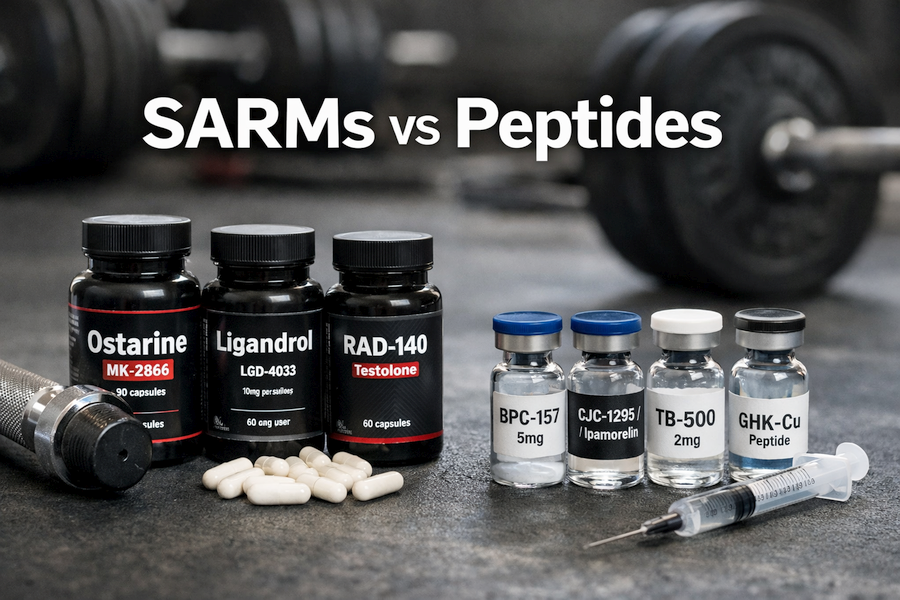
SARMs and peptides are often grouped together because they both sit in the gray zone between supplements and drugs. SARMs are synthetic compounds that act a bit like anabolic steroids, mainly pushing muscle and strength but often suppressing natural hormones. Peptides are short chains of amino acids that signal the body to heal, recover, or release hormones, usually with more subtle and slower effects. In simple terms: SARMs tend to be faster and harsher; peptides are slower and more supportive – but neither is risk-free.
If you hang around fitness forums long enough, you’ll see the same debate pop up again and again: SARMs vs peptides. People argue about which builds more muscle, which is safer, and which one’s “worth it.”
I’ve noticed something interesting, though. A lot of the arguments come from people talking past each other. SARMs and peptides don’t really try to do the same thing. They just end up compared because both are popular with lifters who want an edge without going “full steroid.”
So let’s slow this down and look at both sides, without hype or scare tactics.
What Are SARMs?
SARMs stands for Selective Androgen Receptor Modulators. That’s a mouthful, so most people just say SARMs and move on.
In plain English, SARMs are synthetic compounds designed to attach to androgen receptors in muscle and bone. Testosterone does this naturally, but it also affects the prostate, skin, hair follicles, and more. SARMs were created to be more selective, at least in theory.
The original idea was medical. Researchers were looking for treatments for muscle wasting, osteoporosis, and age-related weakness (1). Gym culture picked them up later.
Common SARMs You’ll Hear About
Some names pop up constantly:
- Ostarine (MK-2866) – often marketed as “mild”
- LGD-4033 (Ligandrol) – popular for size and strength
- RAD-140 (Testolone) – considered more aggressive
- Andarine (S-4) – sometimes linked to vision issues
Each one behaves a bit differently, but the goal is usually the same: more muscle with fewer steroid-like side effects.
That’s the promise, anyway.

How SARMs Work in the Body
SARMs bind to androgen receptors, especially in muscle tissue. When those receptors are activated, the body increases protein synthesis. That’s a fancy way of saying your muscles get better at building and repairing themselves.
This can lead to:
- Faster muscle growth
- Increased strength
- Improved nitrogen retention
Sounds great, right? Here’s the catch.
Even though SARMs are “selective,” they still interfere with your hormone system. Many users experience testosterone suppression, especially with higher doses or longer cycles (2).
Some people bounce back fine. Others don’t.
See Also: Do SARMs Really Work?
What Are Peptides?
Peptides are a completely different category.
Instead of being synthetic hormone-like compounds, peptides are short chains of amino acids. Amino acids are the building blocks of proteins, so peptides already exist naturally in the human body.
The peptides used in fitness or recovery are often signaling molecules. They tell your body to do something it already knows how to do.
That might include:
- Releasing more growth hormone
- Speeding up tissue repair
- Reducing inflammation
- Improving sleep quality
They don’t force growth directly. They nudge the system.

Common Peptides People Talk About
If you’ve looked into peptides, these names probably ring a bell:
- BPC-157 – often used for injury recovery
- TB-500 – linked to tissue repair and mobility
- CJC-1295 – stimulates growth hormone release
- Ipamorelin – another GH-related peptide
- GHK-Cu – sometimes used for skin and hair health
Notice something? Most peptides aren’t marketed primarily for raw muscle size. They’re usually framed around healing, recovery, and longevity.
That difference matters.
How Peptides Work (Without Forcing the Issue)
Peptides bind to specific receptors and trigger natural responses. For example, GH-releasing peptides tell the pituitary gland to release growth hormone when it normally would, just a bit more efficiently.
This means:
- Effects tend to be gradual
- Results depend heavily on sleep, nutrition, and training
- Hormonal shutdown is far less common
That doesn’t mean peptides are harmless. It just means they usually work with your biology instead of overriding it.
Muscle Growth: SARMs vs Peptides
This is the question most people really care about.
SARMs for Muscle
SARMs usually win here, at least short-term.
Many users report:
- Noticeable size gains in weeks
- Rapid strength increases
- Fuller muscles during a cycle
But those gains often come with trade-offs:
- Testosterone suppression
- Mood changes
- Libido issues
- Post-cycle recovery concerns
Some gains fade after stopping unless hormones rebound properly.
Peptides for Muscle
Peptides are more subtle.
Instead of explosive growth, people often notice:
- Better recovery between workouts
- Improved sleep (which matters more than most admit)
- Gradual lean mass increases over months
Peptides don’t usually give that “on-cycle” look. They support consistency instead.
If you’re expecting steroid-like results, peptides may feel underwhelming.
See Also: Peptides in Bodybuilding – Benefits, Risks, and Best Practices
Fat Loss: Different Paths, Same Goal
SARMs like Ostarine or Andarine are often used during cutting phases. They may help preserve muscle while dieting, which can make fat loss look more dramatic (3).
Peptides approach fat loss indirectly:
- Improved insulin sensitivity
- Better sleep and recovery
- Increased growth hormone pulses
Fat loss from peptides tends to be slower but may stick around longer if habits improve alongside them.
Side Effects: Where the Debate Gets Heated
SARMs Side Effects
Despite the “safer than steroids” label, SARMs are not side-effect free.
Reported issues include:
- Testosterone suppression
- Elevated liver enzymes
- Lipid profile changes
- Mood swings
- Vision disturbances (notably with S-4)
One uncomfortable truth: most SARMs sold online are under-researched and poorly regulated (4).
See Also: Do SARMs Make You Infertile? A Clear Look at the Risks

Peptide Side Effects
Peptides usually come with fewer dramatic complaints, but they’re not risk-free.
Possible issues:
- Injection site irritation
- Water retention (with GH-related peptides)
- Tingling or numbness
- Headaches
Quality control is still a concern. Contamination or incorrect dosing can cause problems.
Legal Status and Regulation
Here’s where things get messy.
- SARMs are not approved for human use in most countries. They’re often sold as “research chemicals.” Several are banned by sports organizations (5).
- Peptides exist in a mixed space. Some are prescribed medically, others are research-only, and some are outright restricted depending on location.
Neither category is regulated like standard supplements.
That means purity and labeling matter a lot.
Long-Term Use: What We Don’t Know
This part rarely gets enough attention.
SARMs haven’t been studied long-term in healthy people. We don’t fully know what repeated cycles do over years.
Peptides have more history in clinical settings, but fitness-focused use often involves higher or more frequent dosing than medical protocols.
So when someone says, “I’ve been fine so far,” that’s useful – but incomplete.

Which One Is “Safer”?
That depends on what you mean by safe.
If you mean:
- Less hormonal disruption → peptides likely win
- Faster visible results → SARMs usually win
- Lower recovery burden afterward → peptides again
- Short-term performance boost → SARMs
Neither option is risk-free. The risks are just different.
Who Might Choose SARMs?
SARMs often appeal to:
- Experienced lifters chasing size quickly
- People willing to manage suppression and PCT
- Those focused on short-term physique changes
That doesn’t make it right or wrong. It just means expectations should match reality.
Who Might Choose Peptides?
Peptides tend to attract:
- Older lifters
- People rehabbing injuries
- Those focused on recovery, sleep, and longevity
- Anyone wary of hormonal shutdown
Progress may be slower, but it often feels more sustainable.
A More Balanced Perspective
Here’s my honest take.
If someone expects peptides to feel like SARMs, they’ll be disappointed. If someone expects SARMs to behave like supplements, they’re likely being naive.
Both sit in a gray area. Both require research, caution, and realistic expectations.
Sometimes the best “performance enhancer” is still:
- Better sleep
- Smarter programming
- Consistent nutrition
Not exciting, I know. But it’s often true.
Final Thoughts
SARMs vs peptides isn’t really a fair fight because they play different roles. SARMs are more forceful. Peptides are more cooperative.
One pushes. The other suggests.
If you’re choosing between them, it may help to ask a simpler question first: Am I chasing speed, or am I chasing sustainability?
That answer tends to clarify everything else.


Jim is the founder of Andro HQ and a self-taught supplement reviewer with over 12 years of personal testing experience. He has evaluated more than 150 bodybuilding products and specializes in identifying effective, science-backed alternatives to banned substances. His insights are grounded in real-world use, documented trials, and continuous experimentation in the gym. While not a licensed health professional, Jim aims to help readers navigate the often-confusing supplement market through honest, evidence-informed reviews. More about this author…