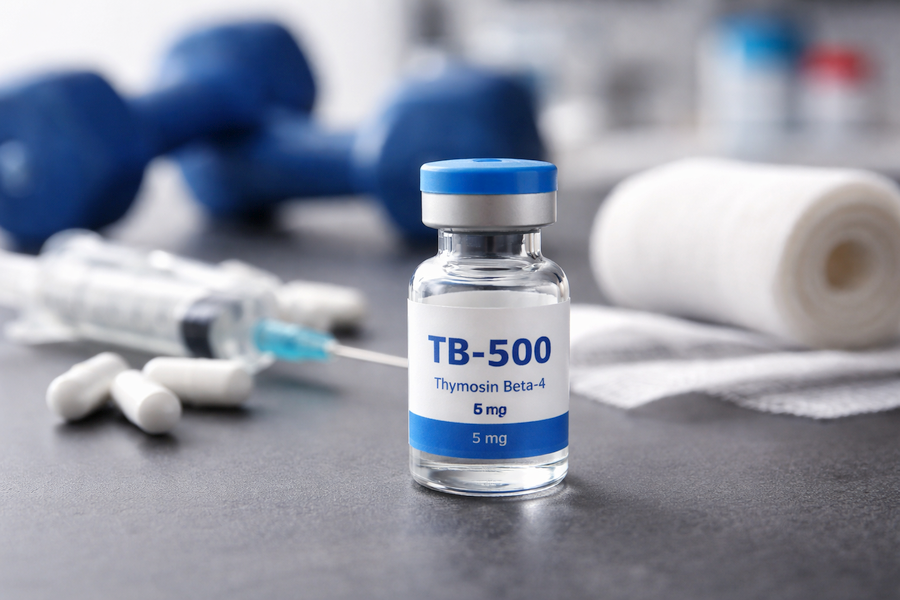
TB-500, also known as Thymosin Beta-4, is a synthetic peptide that mimics a naturally occurring protein involved in tissue repair and cell movement. Some athletes and biohackers use it in hopes of speeding up muscle recovery, tendon healing, and injury repair.
Early research suggests it may help with wound healing, inflammation reduction, and tissue regeneration, but human clinical data is still limited. TB-500 is not FDA-approved for medical use, and its long-term safety remains unclear. Most experimental protocols involve 2–5 mg weekly cycles, though this varies widely.
What Is TB-500?
TB-500 is a synthetic peptide derived from Thymosin Beta-4, a protein that naturally occurs in many human tissues. Scientists first became interested in this molecule because it seems to play a role in cell migration, inflammation control, and tissue repair.
In simple terms, Thymosin Beta-4 helps the body move cells to damaged areas so healing can begin. When tissue gets injured, certain proteins signal cells to travel to the site and start rebuilding the structure. TB-500 appears to mimic that process.
Researchers initially studied it in wound healing experiments, particularly for skin injuries and heart tissue damage. Over time, interest spread into sports medicine because the peptide may influence how muscles, tendons, and ligaments recover from stress (1).
That’s where the underground popularity began. Bodybuilders and athletes started experimenting with TB-500, hoping it could reduce downtime after injuries.
Still, it’s important to keep perspective here. The majority of evidence comes from animal studies and lab research, not large human trials.

How TB-500 Works in the Body
To understand TB-500, it helps to know what actin is. Actin is a protein that forms part of the cytoskeleton of cells, giving them structure and allowing them to move. Thymosin Beta-4 interacts with actin and helps regulate how cells move during healing.
Researchers believe TB-500 may help by:
- Promoting cell migration
- Reducing inflammation
- Encouraging new blood vessel formation
- Supporting tissue regeneration
This combination could explain why the peptide has been studied for skin wounds, heart injuries, nerve damage, and muscle recovery (2).
Another interesting detail: TB-500 appears to circulate through the bloodstream easily. Some peptides only affect the injection site, but TB-500 may travel systemically throughout the body.
Because of that, some users claim it can help with multiple injuries at once.
Potential Benefits of TB-500
The claims around TB-500 can sound almost too good to be true. And honestly, some of them probably are exaggerated. Still, there are several potential benefits researchers have explored.
1. Faster Injury Recovery
This is the reason most people become interested in TB-500. Studies suggest Thymosin Beta-4 may accelerate tissue repair and regeneration, particularly in muscles and connective tissues.
Researchers have observed improved healing in:
- muscle injuries
- tendon damage
- ligament strains
- skin wounds
Some athletes report that nagging injuries (things like shoulder inflammation or tendonitis) improve more quickly when using TB-500. But again, these reports are mostly anecdotal. Human clinical trials are still fairly limited.

2. Reduced Inflammation
Inflammation is part of healing, but too much of it slows recovery. Thymosin Beta-4 appears to help regulate inflammatory signals in the body (3). That could theoretically help injured tissues heal without prolonged swelling or pain.
A few animal studies have shown reduced inflammation markers after TB-500 treatment. This might explain why some users say their joint stiffness decreases during cycles.
3. Improved Wound Healing
The original medical research around Thymosin Beta-4 focused on skin repair. Some experiments showed faster healing of wounds and burns, possibly due to increased cell migration and blood vessel formation (4).
Researchers also looked at its role in corneal healing, particularly for eye injuries. If those mechanisms translate to other tissues, they could help explain why athletes experiment with TB-500 for injury recovery.
4. Enhanced Muscle Recovery
Another popular claim is that TB-500 speeds up muscle repair after intense training. The peptide may support:
- regeneration of muscle fibers
- increased blood flow
- reduced muscle inflammation
In theory, that could mean less soreness and faster return to training. Some people in the performance-enhancement community stack TB-500 with other peptides for this reason.
For example, athletes sometimes combine it with compounds discussed in guides like SARMs vs Peptides when exploring recovery-focused protocols. Still, the science here is evolving.
5. Cardiovascular Repair (Early Research)
One of the more interesting areas of research involves heart tissue recovery. Some studies suggest Thymosin Beta-4 may help protect cardiac cells after injury or improve recovery following heart damage (5).
That’s still experimental, but it shows the peptide may influence more than just muscle healing.

Common Uses of TB-500
TB-500 isn’t an approved medical drug, so there’s no official list of indications. However, people who experiment with it often use it for:
| Use | Why People Try It |
|---|---|
| Muscle injuries | May accelerate recovery |
| Tendonitis | Potential inflammation reduction |
| Ligament tears | Tissue regeneration support |
| Joint pain | Possible anti-inflammatory effects |
| Athletic recovery | Faster training turnaround |
Some biohackers also explore peptides while trying to optimize hormone balance or recovery pathways, which often overlaps with topics like testosterone replacement therapy.
Still, peptides like TB-500 work through very different mechanisms than hormones.
TB-500 vs Thymosin Beta-4
These two terms are often used interchangeably, but they aren’t exactly identical.
Thymosin Beta-4
- Naturally occurring protein
- Found in many human tissues
- Studied in medical research
TB-500
- Synthetic peptide version
- Designed to mimic the active part of Thymosin Beta-4
- Used mainly in research or underground peptide markets
The idea is that TB-500 captures the most biologically active portion of the natural protein. That said, purity and quality can vary widely depending on the source.

TB-500 Dosage (Experimental Protocols)
Since TB-500 isn’t an approved medication, there is no official dosing guideline. However, experimental protocols commonly used in research or athletic communities look something like this:
| Phase | Typical Dose |
|---|---|
| Loading phase | 2–5 mg per week for 4–6 weeks |
| Maintenance phase | 2–5 mg per month |
Some people split doses into multiple injections per week, while others take it once weekly. It’s usually administered through subcutaneous injection.
A few notes worth mentioning:
- Doses vary widely
- Research studies often use different protocols
- Quality control of peptides can be inconsistent
So what you see online shouldn’t be treated as medical guidance.
TB-500 Cycle Length
Typical cycles range from 4 to 8 weeks. After that, users often take a break before starting another cycle.
Long-term continuous use isn’t well studied. And because TB-500 may influence cell growth pathways, some researchers suggest caution with prolonged exposure.
Potential Side Effects
Most anecdotal reports say TB-500 is fairly well tolerated, but that doesn’t mean it’s risk-free.
Possible side effects include:
- fatigue
- headache
- nausea
- injection site irritation
- mild dizziness
Some users also report temporary water retention or lethargy during higher doses.
The bigger concern is that long-term effects are still unknown. Since TB-500 can influence cell growth and blood vessel formation, some researchers have questioned whether it could theoretically affect tumor growth pathways.
Evidence for that is limited, but it’s a topic still being studied.
Is TB-500 Legal?
Legality depends on how it’s marketed and used. In many countries:
- TB-500 is classified as a research chemical
- It is not approved for human consumption
- It may be sold for laboratory research only
Sports organizations also prohibit it. For example, the World Anti-Doping Agency (WADA) lists Thymosin Beta-4 under banned substances.
Athletes subject to drug testing should avoid it.
TB-500 vs BPC-157
TB-500 is often compared with another peptide called BPC-157. Both are associated with injury recovery, but they work differently.
| Feature | TB-500 | BPC-157 |
|---|---|---|
| Origin | Thymosin Beta-4 fragment | Gastric peptide |
| Main focus | Cell migration and healing | Gut and tissue repair |
| Circulation | Systemic | Often localized |
| Research area | Wound and muscle healing | Digestive and tissue healing |
Some users combine them in experimental protocols. Still, research comparing the two directly is scarce.
Is TB-500 Safe?
That’s probably the most important question. The honest answer is: we don’t fully know yet.
Here’s what we do know:
Positive signs
- Early research shows promising healing effects
- Animal studies suggest relatively low toxicity
- Some human studies show beneficial tissue repair signals
Unanswered questions
- Long-term safety
- Cancer pathway interactions
- Hormonal effects
- immune system changes
Because TB-500 affects cell migration and blood vessel formation, scientists want more data before considering medical approval. So while it may look promising, it’s still considered experimental.

Who Should Avoid TB-500?
Certain groups should definitely avoid experimenting with TB-500:
- pregnant women
- individuals with cancer history
- people with autoimmune disorders
- competitive athletes subject to drug testing
Anyone considering peptides should ideally discuss it with a medical professional first.
Final Thoughts
TB-500 sits in a strange place between promising science and underground experimentation.
On one hand, the research around Thymosin Beta-4 is genuinely interesting. The molecule seems to influence tissue repair, inflammation, and cell movement in ways that could eventually lead to new medical treatments.
On the other hand, the version circulating in fitness communities is largely unregulated and poorly studied in humans. That doesn’t mean it has no potential. It just means the hype probably outruns the evidence.
For athletes dealing with injuries, it’s easy to understand the appeal. Faster recovery can feel like a game changer.
Still, when it comes to peptides, patience might be the wiser approach. Science usually moves slower than the supplement industry – and sometimes for good reason.


Jim is the founder of Andro HQ and a self-taught supplement reviewer with over 12 years of personal testing experience. He has evaluated more than 150 bodybuilding products and specializes in identifying effective, science-backed alternatives to banned substances. His insights are grounded in real-world use, documented trials, and continuous experimentation in the gym. While not a licensed health professional, Jim aims to help readers navigate the often-confusing supplement market through honest, evidence-informed reviews. More about this author…