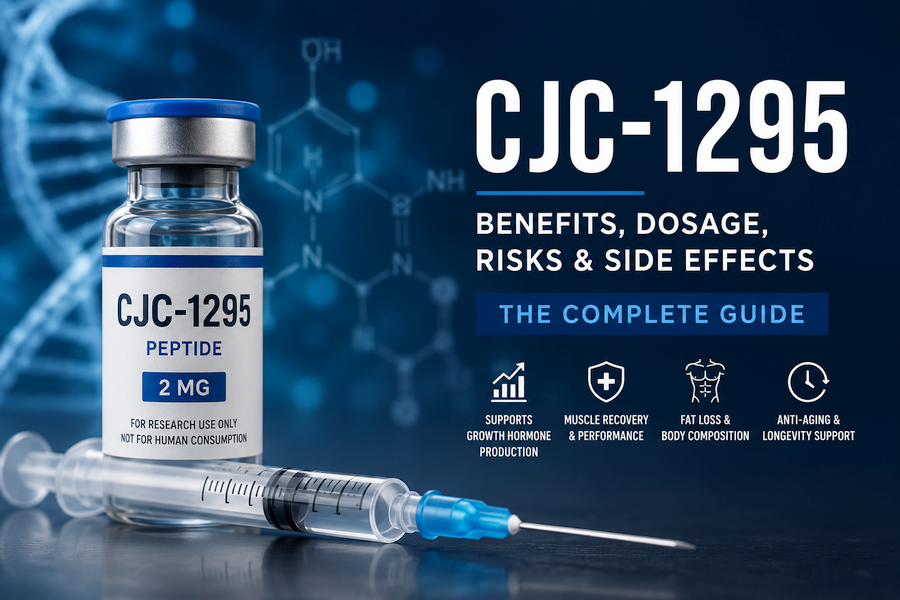
CJC-1295 is a synthetic peptide that stimulates your body’s natural release of growth hormone rather than replacing it directly. Early research suggests it may help increase growth hormone and IGF-1 levels, potentially supporting muscle recovery, fat loss, sleep quality, and healthy aging (1,2). However, it’s still considered an investigational peptide, long-term safety data are limited, and it should only be used under the guidance of a qualified healthcare professional.
Whether you’re interested in bodybuilding, athletic recovery, or healthy aging, you’ve probably come across CJC-1295. It’s often mentioned alongside peptides like Ipamorelin and has developed a reputation for supporting muscle growth and recovery without being actual human growth hormone (HGH).
At first glance, that sounds appealing. Instead of injecting HGH directly, CJC-1295 encourages your own body to produce more of it naturally. Even so, it’s important to separate promising science from internet hype. Some of the claims surrounding this peptide appear to be exaggerated, while others may have legitimate research behind them.
So, what exactly is CJC-1295, and is it worth considering?
What Is CJC-1295?
CJC-1295 is a synthetic peptide that belongs to a class of compounds known as growth hormone-releasing hormone (GHRH) analogs. In simple terms, it mimics your body’s natural GHRH, the hormone responsible for telling the pituitary gland to release growth hormone.
Unlike injected HGH, CJC-1295 doesn’t replace growth hormone. Instead, it encourages your body to produce more of its own. That distinction matters. Many researchers believe stimulating the body’s natural hormone pulses may produce a more balanced response than introducing large amounts of synthetic HGH from outside the body (1).
Today, CJC-1295 is primarily used in research settings and specialty peptide clinics. It has not been approved by the U.S. Food and Drug Administration as a general anti-aging or bodybuilding treatment.
If you’re new to peptide therapy, you might also find our Peptides Overview helpful for understanding how these compounds compare.

How Does CJC-1295 Work?
Your body naturally releases growth hormone in pulses throughout the day, especially during deep sleep. The process works something like this:
| Step | What Happens |
|---|---|
| 1 | The hypothalamus releases growth hormone-releasing hormone (GHRH). |
| 2 | GHRH signals the pituitary gland. |
| 3 | The pituitary releases growth hormone (GH). |
| 4 | GH stimulates production of IGF-1, which helps regulate muscle growth, tissue repair, metabolism, and other functions. |
CJC-1295 essentially steps into this pathway by acting like natural GHRH. As growth hormone increases, IGF-1 usually rises as well. That’s important because many of growth hormone’s long-term effects are actually carried out by IGF-1 (2).
CJC-1295 With DAC vs. Without DAC
One area that often confuses beginners is the difference between the two main versions of CJC-1295.
| CJC-1295 With DAC | CJC-1295 Without DAC |
|---|---|
| Longer half-life | Much shorter half-life |
| Usually injected less often | Usually injected more frequently |
| Produces prolonged GH stimulation | More closely mimics natural GH pulses |
DAC stands for Drug Affinity Complex. This small modification allows the peptide to remain in circulation much longer by binding to albumin in the bloodstream (1). Neither version is automatically “better.”
Some practitioners prefer the prolonged effect of the DAC version, while others believe shorter, more natural pulses may better match normal human physiology. At the moment, research hasn’t clearly established that one approach is superior for every goal.

Potential Benefits of CJC-1295
Although research is still developing, CJC-1295 has shown several promising effects.
1. May Increase Growth Hormone Levels
This is its primary purpose. Clinical studies have demonstrated significant increases in circulating growth hormone after administration, particularly with the DAC version (1).
Naturally, higher GH doesn’t automatically translate into dramatic physical changes. Diet, sleep, genetics, exercise, and overall health still play enormous roles.
2. May Increase IGF-1
IGF-1 is closely associated with:
- Muscle protein synthesis
- Tissue repair
- Bone health
- Recovery
- Metabolism
Several studies found elevated IGF-1 levels following CJC-1295 administration (1,2).
3. May Support Recovery
One reason athletes became interested in peptides is recovery. Growth hormone appears to contribute to tissue repair, collagen production, and healing processes. That doesn’t mean CJC-1295 is a cure-all, but some users report feeling less sore and recovering more quickly between workouts.
Human evidence remains fairly limited, so it’s wise not to overstate these effects.
4. May Help Preserve Lean Muscle
Growth hormone helps maintain lean tissue while encouraging the use of stored fat for energy. Combined with proper resistance training and adequate protein intake, CJC-1295 may help preserve muscle mass during periods of calorie restriction.
It’s important to remember that the peptide isn’t building muscle on its own. Consistent training remains the biggest driver of progress.

5. May Promote Fat Loss
Many people become interested in CJC-1295 because of claims that it “melts fat.” Reality is a bit more nuanced.
Growth hormone does appear to influence fat metabolism, particularly visceral fat, but CJC-1295 isn’t a substitute for maintaining a calorie deficit. Think of it as a possible supporting tool rather than the main reason fat loss occurs.
6. May Improve Sleep Quality
Growth hormone release naturally peaks during deep sleep. Some users report sleeping more deeply while using growth hormone secretagogues, although research specifically evaluating sleep improvements with CJC-1295 remains limited.
Good sleep hygiene is still likely to have a much larger impact than any peptide. If improving natural hormone production is your goal, our article on Natural Ways to Boost HGH discusses several lifestyle strategies worth trying first.
Why Is CJC-1295 Often Combined With Ipamorelin?
One of the most common peptide combinations is CJC-1295 plus Ipamorelin. The reason is fairly straightforward: CJC-1295 stimulates the GHRH receptor, while Ipamorelin activates the ghrelin (GHSR) receptor.
Because they work through different pathways, researchers have suggested the combination may produce a stronger growth hormone response than either peptide alone. That’s one reason peptide clinics frequently pair them together. Even so, larger clinical trials are still needed before firm conclusions can be made.
Dosage and Usage
There is no officially approved dosage for CJC-1295 because it has not been approved by the FDA for routine medical use. Even so, published studies and peptide clinics have used several general dosing approaches.
The schedule usually depends on which version of the peptide is being used.
| Form | General Research Frequency |
|---|---|
| CJC-1295 with DAC | Often administered once or twice per week because of its longer half-life. |
| CJC-1295 without DAC (Modified GRF 1-29) | Commonly administered one to three times daily to better mimic the body’s natural growth hormone pulses. |
Research protocols have used doses ranging from 500 mcg to 2,000 mcg per week for CJC-1295 with DAC, while shorter-acting versions are often administered in much smaller doses several times throughout the day. It’s worth noting that these figures come from research studies and clinical practice patterns rather than officially established treatment guidelines (1,2).
Many peptide clinics combine CJC-1295 with Ipamorelin, since the two peptides stimulate growth hormone release through different receptors. The goal is to produce a stronger natural growth hormone pulse without using synthetic HGH directly. While this combination has become quite popular, large, long-term clinical trials are still lacking.
Some users also choose to take shorter-acting CJC-1295 before bedtime because growth hormone is naturally released during deep sleep. Others schedule injections after exercise for the same reason. At present, however, there is no strong evidence that one timing strategy consistently produces better results than another.
Because CJC-1295 is still considered an investigational peptide, anyone considering its use should speak with a qualified healthcare professional rather than relying on dosing advice from bodybuilding forums or social media. Product quality, purity, and dosing accuracy can vary considerably between suppliers.

Risks and Side Effects
Like most biologically active peptides, CJC-1295 isn’t free of side effects. Reported reactions include:
- Injection-site redness
- Swelling
- Flushing
- Headache
- Dizziness
- Mild nausea
- Water retention
- Tingling sensations
- Temporary increases in appetite
Because growth hormone affects glucose metabolism, some individuals may also experience changes in blood sugar regulation.
Long-term safety is probably the biggest unanswered question. Most published studies have been relatively small, making it difficult to fully understand the risks associated with years of continuous use (2).
Who Should Avoid CJC-1295?
CJC-1295 may not be appropriate for everyone. People should generally avoid it unless specifically advised by their physician if they have:
- Active cancer
- Pregnancy or breastfeeding
- Uncontrolled diabetes
- Certain endocrine disorders
- Untreated pituitary disease
Anyone taking medications that affect hormone levels should also seek medical advice before considering peptide therapy.

Is CJC-1295 Legal?
The legal status of CJC-1295 depends on where you live and how it’s being used. In the United States, CJC-1295 is commonly sold for research purposes, but it is not approved by the FDA as a general anti-aging or bodybuilding medication.
Competitive athletes should also remember that growth hormone secretagogues are prohibited by many sporting organizations, including the World Anti-Doping Agency (WADA).
Final Thoughts
CJC-1295 is one of the more interesting peptides currently being studied because it encourages the body’s own production of growth hormone instead of replacing it directly.
Early research appears promising. Increased growth hormone and IGF-1 levels have been demonstrated in clinical studies, and those changes may support recovery, body composition, and healthy aging under the right circumstances (1,2).
Still, it’s worth keeping expectations realistic. The internet often portrays CJC-1295 as a shortcut to rapid muscle gain and effortless fat loss. Current evidence doesn’t support those kinds of dramatic promises.
For most people, the biggest improvements in recovery and hormone health will still come from consistent resistance training, quality sleep, proper nutrition, and stress management. Peptides may eventually have a place within a carefully supervised treatment plan, but they shouldn’t replace those fundamentals.


Jim is the founder of Andro HQ and a self-taught supplement reviewer with over 12 years of personal testing experience. He has evaluated more than 150 bodybuilding products and specializes in identifying effective, science-backed alternatives to banned substances. His insights are grounded in real-world use, documented trials, and continuous experimentation in the gym. While not a licensed health professional, Jim aims to help readers navigate the often-confusing supplement market through honest, evidence-informed reviews. More about this author…