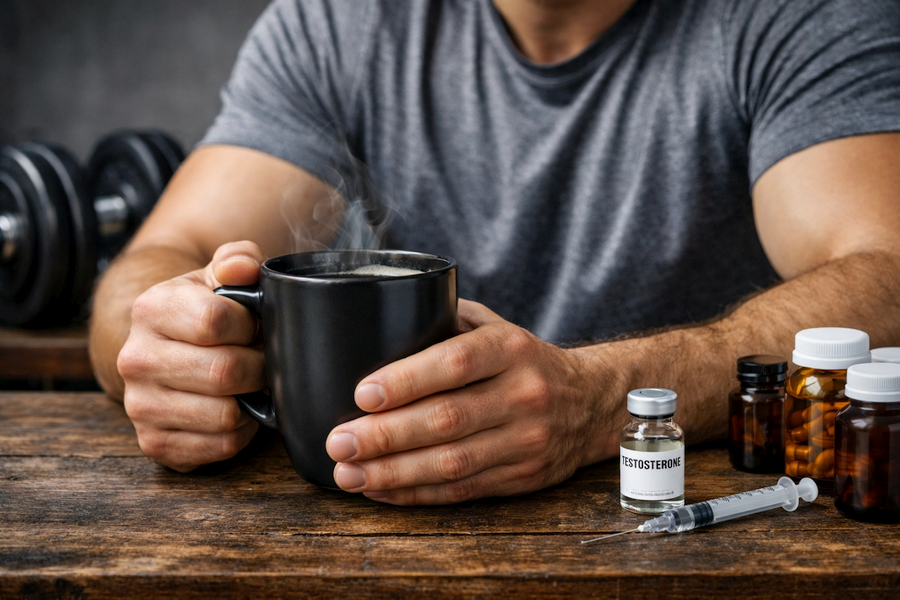
For most men, moderate coffee intake (1–3 cups per day) does not appear to lower testosterone in a meaningful way. In fact, caffeine may slightly increase testosterone during intense exercise. However, heavy coffee use, poor sleep, and high stress could indirectly lower testosterone over time. Like many things in health, the dose and context matter.
Does Coffee Affect Testosterone Levels?
If you’re like me, your morning probably starts with coffee. The smell alone can feel like motivation in a mug. But if you care about your hormones – especially testosterone – you might wonder whether that daily habit is quietly working against you.
I’ve heard it both ways. Some guys say coffee tanks testosterone. Others swear caffeine boosts performance and supports muscle growth. So which is it?
Let’s break it down in plain English.
First, What Does Testosterone Actually Do?
Before we blame coffee for anything, it helps to understand what testosterone really does.
Testosterone is the main male sex hormone. It affects:
- Muscle mass
- Strength
- Libido
- Mood
- Energy
- Fat distribution
- Bone density
Levels naturally rise during puberty, peak in early adulthood, and then slowly decline with age (1). If you want a deeper overview, here’s a full guide on what is testosterone.
Low testosterone can lead to fatigue, low sex drive, mood changes, and trouble building muscle. You can read more about those signs here: Low testosterone symptoms, causes, and treatments.
So yeah, it makes sense that men would worry about anything that might lower it.
What’s in Coffee That Could Affect Testosterone?
The main active compound in coffee is caffeine.
Caffeine works by blocking adenosine, a chemical that makes you feel sleepy. That’s why coffee helps you feel alert. But caffeine also stimulates your nervous system and increases stress hormones like cortisol (2).
And here’s where things get interesting.
Cortisol and testosterone often have an inverse relationship. When cortisol goes up for long periods, testosterone may go down (3). If you want to see how stress ties into hormones, check out this breakdown: How stress affects testosterone.
So does that mean coffee automatically lowers testosterone? Not so fast.
What Do Studies Say About Coffee and Testosterone?
The research isn’t as dramatic as the internet makes it sound.
1. Coffee and Total Testosterone
Several observational studies have looked at caffeine intake and testosterone levels. Some suggest that moderate caffeine intake may be associated with slightly higher testosterone, especially in physically active men (4).
But these are correlations, not proof. Men who drink coffee might also work out more. Or sleep less. Or eat differently. It’s hard to isolate coffee as the sole factor.
2. Caffeine Before Exercise
This part is interesting.
Some studies show that caffeine taken before resistance training may temporarily increase testosterone levels during or shortly after the workout (5). The spike isn’t massive, and it doesn’t last all day. But it may support performance.
That lines up with what we know about caffeine and training. In fact, caffeine is often included in pre-workout formulas. Here’s a deeper dive into caffeine’s performance side: Caffeine benefits for bodybuilding and athletic performance.
So during intense training, caffeine may actually support a short-term testosterone rise.
3. Heavy Caffeine Intake
High doses of caffeine – especially 600 mg or more per day – may increase cortisol significantly (6). If you’re drinking 5–7 strong cups daily, especially under stress, that could create a hormonal environment that isn’t ideal.
Chronic stress plus poor sleep is a bigger concern than coffee alone.
The Sleep Factor (This Is a Big One)
Here’s where coffee can indirectly hurt testosterone.
Testosterone is heavily tied to sleep. Most daily testosterone production happens during deep sleep, especially during REM cycles (7). Even one week of restricted sleep can reduce daytime testosterone levels.
If you drink coffee late in the day and it disrupts your sleep, that’s where problems may show up.
I’ve noticed this personally. If I have coffee after 2 p.m., my sleep gets lighter. I don’t feel fully rested. Do that consistently, and it’s easy to see how hormones could take a hit.
For a full explanation of the sleep-testosterone connection, see: How sleep quality affects testosterone and recovery.
So in this case, coffee isn’t the villain. Poor sleep is.

Coffee, SHBG, and Free Testosterone
Another piece of the puzzle is SHBG (sex hormone-binding globulin).
SHBG binds to testosterone. When testosterone is bound, it’s not “free” to act in your body. Some research suggests caffeine may influence SHBG levels, though results are mixed and may vary by age and body composition (8).
If SHBG rises, free testosterone might decrease – even if total testosterone stays the same.
If you’re curious about that mechanism, here’s a guide: How to lower SHBG.
Still, the evidence doesn’t clearly show that moderate coffee meaningfully worsens free testosterone levels in healthy men.
Coffee and Estrogen Balance
Hormones rarely act alone.
Some research in women shows caffeine can influence estrogen levels depending on genetics and metabolism (9). In men, the data is less clear. There’s no strong evidence that coffee dramatically increases estrogen in men.
That said, overall hormonal balance matters. If you’re worried about estrogen dominance, you might find this helpful: Estrogen in men: symptoms, causes, and how to balance naturally.
Again, coffee alone doesn’t appear to be a major disruptor.
What About Fertility?
Testosterone and fertility aren’t identical, but they’re related.
Some research suggests very high caffeine intake (over 300–500 mg daily) may affect sperm quality in certain men (10). However, moderate intake doesn’t consistently show strong negative effects.
If fertility is your main concern, lifestyle habits (sleep, body fat, alcohol use, stress) usually matter more than a couple cups of coffee.

Moderate vs. Excessive Coffee: A Simple Table
Here’s a quick breakdown.
| Coffee Intake | Likely Testosterone Impact |
|---|---|
| 0 cups | Neutral (depends on lifestyle) |
| 1–3 cups | Likely neutral or slightly supportive (especially with exercise) |
| 4–5 cups | Probably neutral for many, but watch sleep |
| 6+ cups | May increase cortisol, disrupt sleep, possibly lower T over time |
The key word in this table is may. Human biology isn’t black and white.
When Coffee Might Be a Problem
Coffee could work against you if:
- You drink it late in the day.
- You rely on it because you’re chronically sleep deprived.
- You use it to push through high stress without recovery.
- You’re already dealing with elevated cortisol.
In those cases, caffeine becomes part of a bigger issue.
But if you:
- Sleep 7–9 hours
- Train regularly
- Eat enough protein and healthy fats
- Manage stress
Then 1–3 cups of coffee is unlikely to tank your testosterone.

Comparing Coffee to Real Testosterone Killers
If you look at known testosterone disruptors, coffee doesn’t rank high. More concerning factors include:
- Chronic sleep deprivation
- Obesity
- Excess alcohol
- Anabolic steroid abuse
- Severe calorie restriction
You can see a list of more impactful dietary factors here: Testosterone-killing foods.
Coffee rarely makes that list in a meaningful way.
What About Coffee and Aging?
As men age, testosterone naturally declines (11). That drop happens whether you drink coffee or not.
Some researchers even speculate that coffee’s antioxidant content could support metabolic health. Better metabolic health may indirectly support hormone balance, though this connection isn’t fully proven.
If you want to understand how aging ties into testosterone levels, here’s a detailed look: Aging and testosterone levels.
So… Should You Quit Coffee?
Probably not.
Unless:
- It wrecks your sleep
- It makes you anxious
- You’re drinking extreme amounts
- Your doctor specifically advises you to stop
For most men, coffee is more friend than foe.
In fact, the ritual itself – sitting down with a warm cup, getting focused, starting your day – might reduce stress if used mindfully. And stress management supports testosterone more than caffeine avoidance ever will.

Practical Guidelines for Coffee and Testosterone
Here’s what I’d suggest if you care about hormone health:
1. Keep it moderate.
Aim for 100–300 mg of caffeine daily (about 1–3 cups).
2. Cut it off early.
Avoid caffeine 6–8 hours before bed.
3. Prioritize sleep first.
Coffee should enhance your day, not compensate for poor sleep.
4. Watch your total stress load.
High cortisol long-term is worse than caffeine itself.
5. Evaluate how you feel.
If you’re jittery, anxious, or wired at night, adjust your intake.
The Bottom Line
Is coffee bad for testosterone? For most healthy men drinking it in moderation, the answer appears to be no.
In some situations (especially around exercise) caffeine may even provide a small temporary boost.
The real danger isn’t the coffee itself. It’s the lifestyle pattern that sometimes surrounds it: too little sleep, too much stress, and constant stimulation.
If you enjoy your morning cup and you’re sleeping well, training hard, and eating properly, you probably don’t need to stress about coffee hurting your testosterone.
And honestly? Stressing about it might do more harm than the coffee ever would.



Jim is the founder of Andro HQ and a self-taught supplement reviewer with over 12 years of personal testing experience. He has evaluated more than 150 bodybuilding products and specializes in identifying effective, science-backed alternatives to banned substances. His insights are grounded in real-world use, documented trials, and continuous experimentation in the gym. While not a licensed health professional, Jim aims to help readers navigate the often-confusing supplement market through honest, evidence-informed reviews. More about this author…