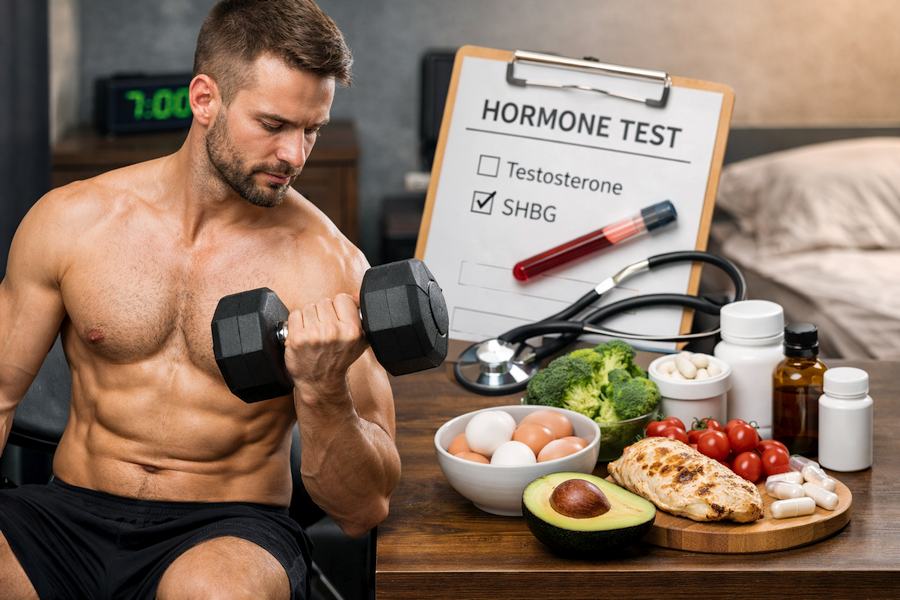
If your SHBG (sex hormone–binding globulin) is high, your body may be tying up too much testosterone. Simple lifestyle changes (like eating enough calories, managing stress, improving sleep, lifting weights, and correcting nutrient gaps) may help lower SHBG naturally and free up more usable testosterone over time.
What SHBG Is (and Why It Matters More Than You Think)
SHBG is a protein made mostly in your liver. Its job is to bind to sex hormones(mainly testosterone and estrogen) and carry them around in your blood.
But here’s the catch: When testosterone is bound to SHBG, it’s basically locked up. Your body can’t use it.
So you might have “normal” or even “high” total testosterone on a lab test, but still feel off. Low energy. Poor libido. Weak workouts. Brain fog. That’s often because free testosterone is low, and SHBG is one reason why.
I’ve seen guys chase testosterone boosters or even consider TRT, only to later realize the real issue wasn’t production – it was availability.
Signs Your SHBG Might Be Too High
High SHBG doesn’t always show up loudly. It’s sneaky. But common signs may include:
- Low libido despite “normal” testosterone
- Erectile issues that don’t make sense
- Trouble building muscle
- Fatigue that sleep doesn’t fix
- Low motivation or confidence
- Poor workout recovery
Blood work is the only way to know for sure, but if this list sounds familiar, SHBG is worth looking at.
Why SHBG Goes Up in the First Place
SHBG doesn’t rise randomly. It usually increases when the body senses stress, under-fueling, or hormonal imbalance.
Common triggers include:
- Chronic calorie restriction
- Overtraining
- High cortisol
- Low insulin levels
- Aging
- Liver signaling changes
- Low androgen activity
- Excess estrogen
- Certain medications
This is why some “healthy” habits (like aggressive fasting or extreme dieting) can backfire hormonally.
1. Stop Undereating (Yes, Really)
One of the most overlooked causes of high SHBG is not eating enough.
When calories are consistently low, insulin stays low too. That sounds good on paper – but insulin actually helps suppress SHBG production in the liver (1).
I’ve personally noticed this during cutting phases. Strength drops. Libido fades. Blood work later shows SHBG creeping up.
What helps:
- Eat enough total calories
- Avoid long-term crash dieting
- Include carbs, especially around workouts
This doesn’t mean binging. It means fueling like an adult, not a monk.
If you’ve experimented with fasting, this is where things can get tricky. Extended fasting may increase SHBG in some men, especially if stress is high or calories are too low. You can read more about Intermittent Fasting and Testosterone.

2. Manage Cortisol Before It Manages You
High cortisol and high SHBG often travel together. Chronic stress tells your body that survival matters more than reproduction. Testosterone gets deprioritized, and SHBG often rises as part of that shift (2).
Ways to lower cortisol that actually work:
- Sleeping 7–9 hours consistently
- Cutting back on excessive cardio
- Limiting caffeine late in the day
- Walking outside (seriously underrated)
- Breathing exercises you’ll actually do
If stress is a major factor for you, it’s worth reading more about how stress can wreck your testosterone levels.
3. Lift Heavy (But Don’t Destroy Yourself)
Resistance training tends to lower SHBG over time, especially when paired with adequate food intake (3). But there’s a balance.
Helpful:
- Compound lifts
- Moderate volume
- Progressive overload
Not helpful:
- Daily maxing out
- Two-hour sessions
- Never taking rest days
Overtraining can raise cortisol, which may cancel out the benefits. Think stimulate, don’t annihilate.

4. Improve Sleep (This Isn’t Optional)
Poor sleep is one of the fastest ways to disrupt hormones.
Short or fragmented sleep:
- Raises cortisol
- Lowers testosterone
- May indirectly increase SHBG
Even one bad week can show up on labs.
If sleep is rough for you, this article breaks it down clearly:
How Sleep Quality Affects Testosterone and Recovery
5. Get Enough Protein – But Don’t Go Zero-Carb
Very high protein, ultra-low carb diets can push SHBG higher in some men (4). Protein is important, no doubt. But carbs matter too, especially for:
- Insulin signaling
- Thyroid function
- Training performance
A more balanced approach often works better hormonally than extremes.
6. Fix Common Nutrient Deficiencies
Certain nutrients are closely tied to SHBG and free testosterone.
Boron
Boron has been shown to reduce SHBG and increase free testosterone in some studies, even within a week (5). This is one of the more interesting nutrients here. Not fairy dust – but promising.
See Also: Boron Benefits, Risks, Side Effects and Dosage
Vitamin D
Low vitamin D is often linked with higher SHBG and lower free testosterone (6). Sunlight helps. Supplements can too – especially in winter.
Related: Vitamin D Benefits for Men
Magnesium
Magnesium may reduce SHBG binding and support androgen activity (7). If you train hard or sweat a lot, your needs may be higher.
7. Consider Certain Adaptogens (Carefully)
Some herbs appear to influence SHBG indirectly by reducing stress or improving androgen signaling. Examples include:
- Ashwagandha
- Tongkat Ali
- Rhodiola
Ashwagandha, in particular, may lower cortisol and slightly increase free testosterone in stressed men (8).
That said, herbs aren’t guaranteed fixes. They work best when the basics (sleep, food, training) are already handled.
8. Don’t Ignore Estrogen Balance
High estrogen can increase SHBG production in the liver (9). This doesn’t mean estrogen is “bad.” You need it. But imbalance matters.
Helpful strategies:
- Lose excess body fat slowly
- Limit heavy alcohol use
- Eat enough fiber
- Support liver health
If this topic applies to you, this article gives a solid overview:
Estrogen in Men – Symptoms, Causes & How to Balance Naturally

9. Cold Exposure: Helpful or Harmful?
Cold exposure is interesting. Short, controlled cold exposure may improve insulin sensitivity and stress resilience. But excessive cold stress (especially combined with low calories) can raise cortisol and potentially increase SHBG.
This is one of those “dose matters” situations. If you’re curious, here’s a balanced take: Cold Exposure and Testosterone – Do Ice Baths Boost Male Hormones?
10. Alcohol: Less Is Usually Better
Alcohol affects the liver directly, and SHBG is made in the liver. Heavy drinking:
- Raises estrogen
- Disrupts testosterone
- Alters SHBG signaling
You don’t have to quit forever. But cutting back often improves labs faster than people expect.
A Simple Lifestyle Snapshot That Often Lowers SHBG
Here’s what tends to work in real life:
| Habit | Direction |
|---|---|
| Eat enough calories | ↓ SHBG |
| Lift weights 3–4x/week | ↓ SHBG |
| Sleep 7–9 hours | ↓ SHBG |
| Manage stress | ↓ SHBG |
| Avoid extreme dieting | ↓ SHBG |
| Correct deficiencies | ↓ SHBG |
Not glamorous – just effective.
When Natural Methods May Not Be Enough
Sometimes SHBG stays high despite doing everything “right.” This can happen with:
- Aging
- Genetic factors
- Certain medications
- Thyroid conditions
At that point, working with a knowledgeable clinician matters. Not to jump straight to treatment – but to understand why your body is holding onto SHBG so tightly.
If you’re already exploring medical options, this guide may help clarify things:
TRT Guide – Benefits, Risks, Costs & What Men Should Know
Final Thoughts (No Dramatic Conclusion Needed)
Lowering SHBG naturally isn’t about hacks. It’s about signals.
Your body raises SHBG when it senses stress, scarcity, or imbalance. When you reverse those signals (through food, sleep, training, and recovery) SHBG often comes down on its own.
Not overnight. But steadily.
If I had to sum it up in one sentence: treat your body like it’s safe, fed, and supported – and hormones tend to cooperate.


Jim is the founder of Andro HQ and a self-taught supplement reviewer with over 12 years of personal testing experience. He has evaluated more than 150 bodybuilding products and specializes in identifying effective, science-backed alternatives to banned substances. His insights are grounded in real-world use, documented trials, and continuous experimentation in the gym. While not a licensed health professional, Jim aims to help readers navigate the often-confusing supplement market through honest, evidence-informed reviews. More about this author…