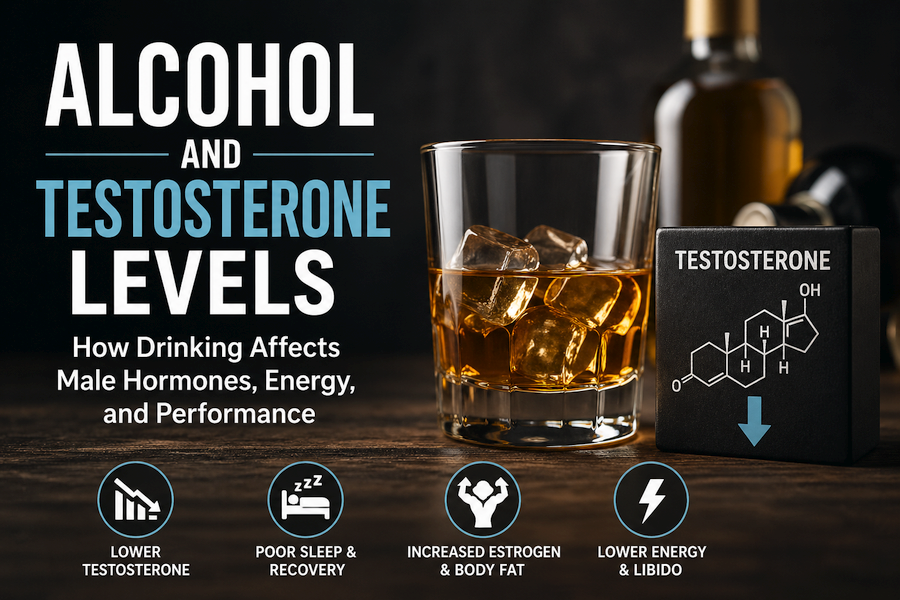
Alcohol can lower testosterone, especially when consumed in large amounts or over long periods. A single night of heavy drinking may temporarily reduce testosterone for 24–48 hours, while chronic alcohol use can lead to more lasting hormonal imbalance. That said, light or occasional drinking appears to have a smaller, less consistent effect – and in some cases may not significantly impact testosterone at all.
Alcohol and Testosterone: What’s Really Going On?
If you’ve ever had a few drinks and felt sluggish the next day, you’ve probably noticed something feels “off.” It’s not just the hangover. Your hormones may be part of the story.
Testosterone, the primary male sex hormone, plays a major role in muscle growth, libido, energy, and mood. And alcohol? It interacts with all of those systems in ways that aren’t always obvious.
The relationship between alcohol and testosterone isn’t black and white. It’s more like a sliding scale. A couple of drinks on the weekend likely won’t wreck your hormones. But consistent heavy drinking… that’s where things start to shift.
How Alcohol Affects Testosterone
Alcohol doesn’t just “lower testosterone” in a simple way. It affects multiple systems at once, which can create a kind of domino effect.
1. It Interferes With Hormone Production
Testosterone is produced mainly in the testes, but the process is controlled by signals from the brain – specifically the hypothalamus and pituitary gland.
Alcohol appears to disrupt this signaling loop.
When you drink heavily, your brain may release less luteinizing hormone (LH). That hormone tells your testes to produce testosterone. Less LH means less testosterone production (1).
Even moderate drinking may slightly blunt this signal, although the effect tends to be smaller and less consistent.

2. It Raises Cortisol (the Stress Hormone)
Alcohol might feel relaxing in the moment, but your body doesn’t always see it that way.
After drinking, cortisol levels often rise. And cortisol and testosterone have a bit of a tug-of-war relationship. When cortisol goes up, testosterone tends to go down (2).
If you’ve read about how stress impacts hormones, you’ll recognize this pattern. Chronic stress – and frequent drinking – can create a similar hormonal environment.
If you want a deeper look at that connection, check out this article on How Stress Can Wreck Your Testosterone Levels.
3. It Can Increase Estrogen
Alcohol may also influence how your body handles estrogen.
In men, a small amount of estrogen is normal and necessary. But too much can cause problems. Alcohol seems to increase the activity of an enzyme called aromatase, which converts testosterone into estrogen (3).
That shift can lead to:
- Lower free testosterone
- Increased body fat
- Potential symptoms like reduced libido or energy
This ties closely into broader hormonal balance. If you’re curious about that angle, this guide goes deeper: Estrogen in Men – Symptoms, Causes & How to Balance Naturally.
4. It Disrupts Sleep (Which Hurts Testosterone)
Here’s one that gets overlooked a lot.
Alcohol might help you fall asleep faster – but the quality of that sleep is usually worse. It reduces REM sleep and can lead to more nighttime awakenings.
And testosterone? It’s heavily tied to sleep quality.
Most daily testosterone release happens during deep sleep. So if your sleep is fragmented, your hormone production may suffer (4).
There’s a solid breakdown of this connection here: How Sleep Quality Affects Testosterone and Recovery.

Short-Term vs Long-Term Effects
Not all drinking has the same impact. The difference between one night out and years of heavy drinking is huge.
Short-Term Effects (After a Night of Drinking)
- Temporary drop in testosterone (often within 24 hours)
- Increase in cortisol
- Poor sleep that night
- Reduced energy or libido the next day
In most cases, levels return to normal within a day or two.
Long-Term Effects (Chronic Drinking)
This is where things get more serious.
Regular heavy drinking may lead to:
- Persistently lower testosterone levels
- Reduced sperm production
- Testicular shrinkage (in extreme cases)
- Increased estrogen levels
- Fat gain, especially around the midsection
Over time, this can resemble symptoms of low testosterone, which you can read more about here: Low Testosterone in Men: Symptoms, Causes, and Treatments.
How Much Alcohol Is “Too Much”?
This is where things get a little fuzzy.
There’s no universal cutoff where testosterone suddenly drops. But research tends to point in a general direction:
| Drinking Level | Likely Effect on Testosterone |
|---|---|
| Light (1–2 drinks occasionally) | Minimal or no significant effect |
| Moderate (a few drinks weekly) | Slight or inconsistent changes |
| Heavy (binge drinking) | Noticeable short-term drop |
| Chronic heavy use | Long-term suppression |
“Binge drinking” usually means 4–5+ drinks in a short period. That’s where you’re most likely to see a measurable dip in testosterone.

Does Beer Lower Testosterone More Than Other Alcohol?
You’ve probably heard that beer is worse because of hops, which contain plant compounds that may act like weak estrogens. There might be something to that, but the effect is likely small compared to the overall impact of alcohol itself.
In other words, the amount you drink matters more than the type. Still, if you’re drinking heavily (and especially if beer is your go-to) you could be getting a double hit: alcohol plus mild estrogen-like compounds.
Alcohol, Muscle Growth, and Performance
If you’re training regularly, this is where things get more practical.
Lower testosterone doesn’t just affect libido – it can impact your ability to build muscle.
Alcohol may:
- Reduce protein synthesis (muscle repair process)
- Lower testosterone temporarily
- Increase recovery time
- Disrupt sleep, which further slows recovery
So even if your testosterone levels bounce back, your training progress might still take a hit.
This connects with other factors like insulin and recovery, which are covered here: Insulin and Muscle Growth: What You Really Need to Know.
Is Moderate Drinking Actually Harmless?
This is where things get interesting. Some studies suggest that moderate drinking may not significantly lower testosterone, and in some cases might even show slight increases.
But that doesn’t necessarily mean alcohol is “good” for testosterone. It may just reflect short-term hormonal fluctuations or lifestyle differences.
For example, someone who drinks moderately might also:
- Socialize more
- Have lower stress levels
- Maintain a balanced lifestyle
So it’s hard to isolate alcohol as the cause. In practical terms, moderate drinking seems unlikely to cause major harm for most men – but it’s not a performance enhancer either.
Personal Perspective (What Most Guys Notice)
Anecdotally, a lot of guys report the same pattern:
- A couple of drinks → no noticeable issue
- A night of heavy drinking → low energy, poor sleep, reduced libido the next day
- Regular drinking → gradual drop in motivation, gym performance, and drive
That doesn’t prove causation, but it lines up with what research suggests.
How to Minimize the Impact of Alcohol
If you don’t want to quit drinking entirely, there are ways to reduce the downside.
Practical Tips
- Limit binge drinking – this is the biggest factor
- Stay hydrated – helps reduce stress on the body
- Avoid drinking before bed – improves sleep quality
- Eat before drinking – slows alcohol absorption
- Keep it occasional – frequency matters just as much as quantity
You don’t need to be perfect. Just avoiding the worst habits can make a noticeable difference.
Alcohol vs Other Testosterone Killers
Alcohol isn’t the only thing that can lower testosterone.
Other common factors include:
- Poor sleep
- Chronic stress
- Excess body fat
- Nutrient deficiencies
- Certain medications
If you stack several of these together – say, poor sleep + stress + heavy drinking – the effect may be much stronger.
There’s a helpful overview of dietary factors here: The Top 7 Testosterone-Killing Foods.

Can You Drink and Still Maintain Healthy Testosterone?
Yes… but with some boundaries.
If your goal is optimal testosterone, alcohol probably isn’t helping. But if your goal is simply to avoid major hormonal issues, moderate drinking is unlikely to derail you.
Think of it like this:
- Occasional drinks → manageable
- Regular heavy drinking → likely harmful
It’s less about perfection and more about patterns.
Final Thoughts
Alcohol and testosterone have a complicated relationship. It’s not as simple as “one drink kills your hormones,” but it’s also not harmless – especially at higher levels.
Heavy drinking appears to lower testosterone, increase estrogen, disrupt sleep, and raise cortisol. Over time, those effects can add up.
On the flip side, occasional or moderate drinking seems to have a much smaller impact. For most guys, it’s something to keep in check rather than eliminate entirely.
If you’re serious about improving testosterone – whether for muscle, energy, or overall health – cutting back on alcohol is one of the easier levers to pull.


Jim is the founder of Andro HQ and a self-taught supplement reviewer with over 12 years of personal testing experience. He has evaluated more than 150 bodybuilding products and specializes in identifying effective, science-backed alternatives to banned substances. His insights are grounded in real-world use, documented trials, and continuous experimentation in the gym. While not a licensed health professional, Jim aims to help readers navigate the often-confusing supplement market through honest, evidence-informed reviews. More about this author…