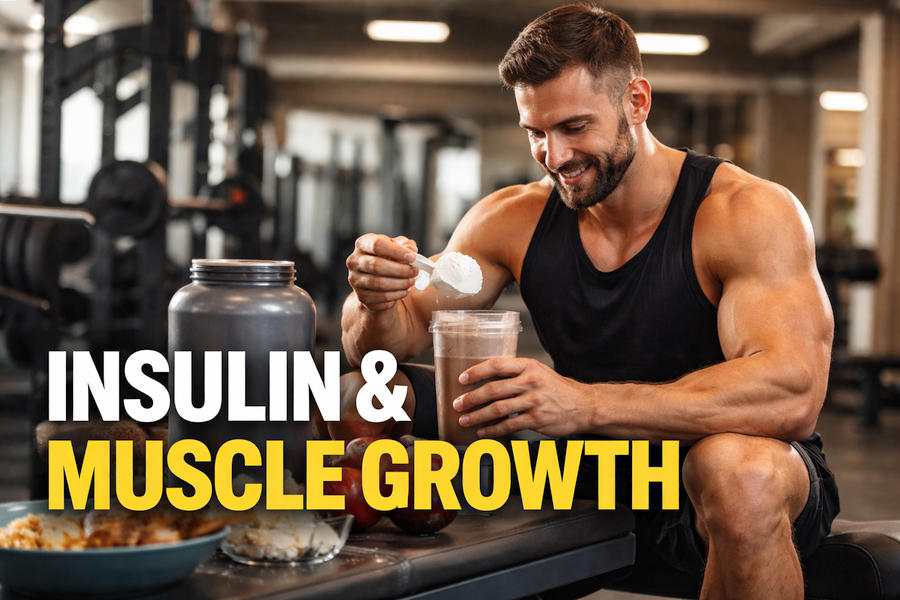
Insulin plays a key role in muscle growth by helping shuttle nutrients like glucose and amino acids into muscle cells. It also reduces muscle breakdown. However, more insulin isn’t always better – timing, diet quality, and overall metabolic health matter just as much as insulin levels themselves.
If you’ve spent any time in fitness circles, you’ve probably heard insulin described in two very different ways.
Some people treat it like a powerful anabolic hormone – almost on par with testosterone. Others warn that it’s the main reason people gain fat and develop metabolic problems.
Both views have some truth to them, but the reality is a bit more nuanced. Insulin is neither “good” nor “bad.” It’s a tool your body uses.
And when it comes to building muscle, it may be more important than most people realize – just not in the way it’s often hyped. Let’s break this down in plain English.
What Is Insulin, Exactly?
Insulin is a hormone made by your pancreas. Its main job is to regulate blood sugar.
When you eat carbs (and to a lesser extent protein), your blood sugar rises. In response, insulin gets released. It then helps move nutrients from your bloodstream into your cells.
That includes:
- Glucose → used for energy or stored as glycogen
- Amino acids → used for muscle repair and growth
- Fatty acids → stored or used for energy
So, insulin is basically a nutrient delivery system. And for muscle growth, that’s a pretty big deal.

How Insulin Supports Muscle Growth
Insulin influences muscle growth in a few key ways. Some of these are direct, while others are more supportive.
1. It Increases Nutrient Uptake
After a workout, your muscles are like sponges. They’re primed to absorb nutrients.
Insulin helps push:
- Glucose into muscle cells (for glycogen replenishment)
- Amino acids into muscle cells (for protein synthesis)
Without insulin, this process would be much less efficient. This is one reason why post-workout meals matter.
If you’ve ever looked into protein timing for muscle growth, you might have come across this idea already.
2. It Reduces Muscle Breakdown
Here’s something that often gets overlooked: Insulin is strongly anti-catabolic. That means it helps prevent muscle breakdown.
Even if insulin doesn’t directly “build” muscle as aggressively as testosterone or IGF-1, it creates an environment where muscle loss is minimized. And in the long run, that matters.
Muscle growth isn’t just about building new tissue – it’s also about holding onto what you’ve built.
3. It Supports Glycogen Storage
Glycogen is stored carbohydrate inside your muscles. When glycogen levels are high:
- Your workouts feel stronger
- Recovery tends to improve
- Training volume increases
Insulin plays a central role in this process. More glycogen = better performance = more growth over time.

4. It Works Alongside Other Hormones
Insulin doesn’t operate in isolation. It interacts with:
- Testosterone
- Growth hormone
- IGF-1
- Cortisol
For example, high cortisol can increase muscle breakdown. If you’re curious about that relationship, this article on how cortisol affects muscle growth connects the dots well.
Insulin helps counterbalance some of cortisol’s effects, especially around training.
Does More Insulin Mean More Muscle?
This is where things get tricky. It might seem logical to think: “If insulin helps muscle growth, then higher insulin = more muscle.”
But that’s not really how it works.
The Problem With Constantly High Insulin
Chronically high insulin levels (often from poor diet or overeating) can lead to:
- Fat gain
- Reduced insulin sensitivity
- Increased inflammation
- Lower metabolic flexibility
Over time, your body becomes less responsive to insulin – a condition called insulin resistance. And that’s where things start to go downhill.

Insulin Sensitivity Matters More Than Insulin Levels
Instead of focusing on having more insulin, it’s better to focus on how sensitive your body is to insulin. When you’re insulin sensitive:
- Your muscles respond quickly to insulin
- Nutrients are directed toward muscle instead of fat
- Blood sugar stays stable
When you’re insulin resistant:
- Nutrients are more likely to be stored as fat
- Muscle cells don’t respond as well
- Recovery may suffer
So, in a way, efficient insulin use beats excessive insulin release.
The Role of Carbs in Muscle Growth
Carbohydrates are the main trigger for insulin release. This is why carb intake is often debated in fitness.
Do You Need Carbs to Build Muscle?
Technically, no. But in practice, carbs appear to support muscle growth, especially for people training hard.
Here’s why:
- They replenish glycogen
- They improve workout performance
- They help drive insulin release post-workout
That said, the amount you need can vary a lot. Some people do well on moderate carbs. Others prefer higher-carb diets.

Carb Timing and Insulin
Timing carbs around your workouts may help maximize insulin’s benefits. A simple approach:
- Pre-workout: moderate carbs for energy
- Post-workout: carbs + protein to spike insulin and aid recovery
This doesn’t have to be complicated. Even something like rice and chicken after a workout can get the job done.
Insulin vs. Testosterone: Which Matters More?
It’s tempting to compare hormones directly, but they play different roles.
- Testosterone → drives muscle-building signals
- Insulin → supports nutrient delivery and reduces breakdown
So instead of asking which is “better,” it’s more accurate to say: You need both working together.
If testosterone is the builder, insulin is the supply chain. If you’re interested in optimizing testosterone naturally, this guide on what testosterone is and how it works is worth a read.
Insulin and Fat Gain: The Other Side of the Coin
Insulin also promotes fat storage. That’s where its reputation gets messy.
Why Insulin Can Lead to Fat Gain
When insulin is elevated:
- Fat burning slows down
- Nutrients are stored more easily
- Excess calories are more likely to become body fat
But here’s the key point: Insulin doesn’t cause fat gain by itself – calorie surplus does.
Insulin just helps direct where those calories go.

Can You Build Muscle Without Gaining Fat?
Yes – but it’s harder than most people think. To do this, you generally need:
- A small calorie surplus
- Good insulin sensitivity
- Proper training
- Adequate protein intake
This is often called a “lean bulk.”
Insulin Spikes: Should You Chase Them?
Some older bodybuilding advice encouraged people to “spike insulin” as much as possible after workouts.
Things like:
- Sugary drinks
- High-glycemic carbs
- Massive carb loads
But newer thinking suggests this may be unnecessary.
What the Evidence Seems to Suggest
Research (and real-world experience) may suggest:
- A moderate insulin response is enough
- Protein alone can stimulate insulin to some degree
- Excessive spikes don’t necessarily lead to more muscle growth
So instead of chasing huge spikes, it’s probably smarter to:
- Focus on balanced meals
- Prioritize total daily nutrition
- Stay consistent

How to Optimize Insulin for Muscle Growth
Here’s a practical, no-nonsense approach.
1. Train Regularly (Especially Resistance Training)
Lifting weights improves insulin sensitivity. Your muscles become better at absorbing nutrients.
This alone can make a big difference.
2. Eat Enough Protein
Protein supports muscle repair and also triggers a mild insulin response. Aim for around 0.7–1 gram per pound of body weight daily
3. Use Carbs Strategically
You don’t need extreme carb loading. But placing carbs around workouts may help.
Good options include:
- Rice
- Potatoes
- Oats
- Fruit
4. Manage Stress
Chronic stress raises cortisol, which can interfere with insulin function. If stress is an issue, this article on how stress affects testosterone ties into the bigger picture.
5. Prioritize Sleep
Poor sleep reduces insulin sensitivity. Even a few nights of bad sleep can affect how your body handles carbs.
If this is something you struggle with, check out how sleep affects testosterone and recovery.
6. Stay Lean (Within Reason)
Higher body fat levels are linked to lower insulin sensitivity. You don’t need to be shredded, but staying in a healthy range helps.
Common Myths About Insulin and Muscle Growth
Let’s clear up a few misconceptions.
Myth 1: “Insulin Is the Most Anabolic Hormone”
It’s important, but it’s not the main driver. Testosterone and mechanical tension (training) play bigger roles.
Myth 2: “You Need Huge Carb Meals to Grow”
More carbs don’t always equal more muscle. At some point, extra carbs just become stored fat.
Myth 3: “Low-Carb Diets Kill Muscle Growth”
Not necessarily. Some people build muscle just fine on lower carbs – though performance may differ.
Myth 4: “Insulin Spikes Are Everything”
Consistency matters more than short-term spikes. Daily habits beat one “perfect” post-workout meal.
Final Thoughts
Insulin is one of those hormones that gets misunderstood. It’s easy to label it as either a muscle-building hero or a fat-gain villain.
In reality, it’s both – and neither. It’s a tool.
Used correctly, insulin:
- Helps deliver nutrients to muscles
- Supports recovery
- Reduces muscle breakdown
Used poorly (or chronically elevated), it:
- Encourages fat storage
- Leads to insulin resistance
- Slows progress over time
So the goal isn’t to maximize insulin at all costs. It’s to use it strategically.
Train hard. Eat well. Stay consistent. That’s what really moves the needle.


Jim is the founder of Andro HQ and a self-taught supplement reviewer with over 12 years of personal testing experience. He has evaluated more than 150 bodybuilding products and specializes in identifying effective, science-backed alternatives to banned substances. His insights are grounded in real-world use, documented trials, and continuous experimentation in the gym. While not a licensed health professional, Jim aims to help readers navigate the often-confusing supplement market through honest, evidence-informed reviews. More about this author…