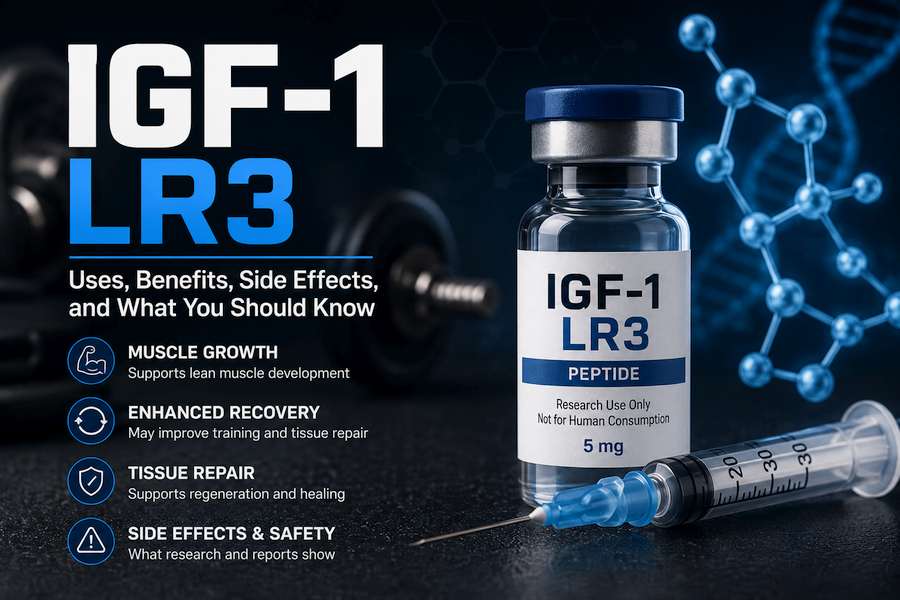
IGF-1 LR3 is a synthetic, long-acting version of insulin-like growth factor-1 (IGF-1), a hormone involved in muscle growth, tissue repair, and cell development. It has attracted attention among bodybuilders and researchers because of its potential to support lean muscle gains and recovery. However, IGF-1 LR3 is not approved by the FDA for general medical use, and there are important safety concerns, including hypoglycemia, fluid retention, and unknown long-term risks. While early research appears promising in some areas, much of the evidence is still limited, so it’s important to approach claims with caution.
If you’ve spent any time researching performance-enhancing peptides, you’ve almost certainly come across IGF-1 LR3. It’s often described as one of the most powerful compounds available for muscle growth, with claims ranging from accelerated recovery to the ability to stimulate entirely new muscle fibers.
Those claims are certainly intriguing—but how much of them are actually supported by science? The answer is more nuanced than many websites suggest.
IGF-1 LR3 possesses several unique biochemical characteristics that distinguish it from native IGF-1. It is designed to remain active in the body longer and to interact less with insulin-like growth factor binding proteins (IGFBPs), potentially allowing greater receptor activation over time. These properties have made it a popular subject of laboratory research. (2,5)
At the same time, it’s important to recognize that published human research specifically involving IGF-1 LR3 is extremely limited. Most scientific knowledge about its potential effects is inferred from decades of research on the broader IGF-1 signaling pathway rather than direct clinical studies of LR3 itself. (2,5)
What Is IGF-1 LR3?
IGF-1 LR3 stands for Insulin-Like Growth Factor-1 Long Arg3. It’s a modified version of naturally occurring insulin-like growth factor-1 (IGF-1), a hormone produced primarily by the liver in response to growth hormone (GH) released from the pituitary gland.
IGF-1 plays an essential role in normal growth during childhood and continues to regulate tissue maintenance and repair throughout adulthood. (2,5) In healthy adults, IGF-1 helps regulate numerous biological processes, including:
- Muscle maintenance
- Tissue repair
- Bone remodeling
- Protein synthesis
- Cell growth
- Cell survival
- Cellular differentiation
Unlike peptides such as CJC-1295, Ipamorelin, or Sermorelin, which primarily stimulate the body’s own release of growth hormone, IGF-1 LR3 acts farther downstream in the growth hormone pathway by interacting directly with the IGF-1 receptor (IGF-1R) found throughout many tissues. (2,5)
See Also: Peptides – What They Are, How They Work, and Why They’re Used

What Does “LR3” Mean?
The “LR3” designation refers to structural modifications made to the native IGF-1 molecule. These include:
- A substitution of arginine at the third amino acid position.
- An additional 13-amino-acid extension at the N-terminus.
These changes were designed to alter how the molecule behaves in circulation.
Compared with native IGF-1, IGF-1 LR3 appears to:
- Bind less strongly to IGF binding proteins (IGFBPs).
- Remain biologically available for a longer period.
- Produce more sustained activation of the IGF-1 receptor in experimental models. (2,5)
While native IGF-1 is tightly regulated by binding proteins that limit its free concentration, IGF-1 LR3 was engineered specifically to reduce that interaction.
How Does IGF-1 LR3 Work?
To understand IGF-1 LR3, it helps to first understand the body’s normal growth hormone pathway. In simplified form:
- The pituitary gland releases growth hormone.
- Growth hormone stimulates the liver.
- The liver produces IGF-1.
- IGF-1 binds to IGF-1 receptors throughout the body.
- Those receptors activate signaling pathways involved in growth, repair, and metabolism. (2,5)
Rather than stimulating growth hormone release, IGF-1 LR3 bypasses the earlier steps and directly activates the IGF-1 receptor (IGF-1R). Once activated, the receptor initiates several intracellular signaling pathways, including:
- PI3K/AKT
- mTOR
- RAS/MAPK
These pathways regulate numerous biological functions, including:
- Protein synthesis
- Cell survival
- Cell proliferation
- Cell differentiation
- Glucose metabolism
- Tissue repair
Among these, the PI3K/AKT/mTOR pathway is especially well known because it helps regulate muscle protein synthesis and cellular growth. The RAS/MAPK pathway, meanwhile, plays a major role in cell proliferation and differentiation. (2,5,6)
It’s worth emphasizing that these signaling pathways are normal physiological processes. They are activated every day in response to exercise, nutrition, and naturally produced hormones. IGF-1 LR3 simply attempts to stimulate one part of that system more directly.
See Also: Ipamorelin – Uses, Benefits, and Side Effects

IGF-1 LR3 and Muscle Growth
One reason IGF-1 LR3 has attracted so much attention is that IGF-1 signaling influences several mechanisms involved in muscle adaptation.
Muscle Hypertrophy
Most increases in muscle size occur through hypertrophy, meaning existing muscle fibers become larger rather than increasing in number. Resistance training creates microscopic damage within muscle tissue.
During recovery, the body responds by increasing:
- Protein synthesis
- Amino acid uptake
- Cellular repair
- Muscle fiber remodeling
IGF-1 is one of several hormones involved in coordinating this response alongside testosterone, growth hormone, insulin, and mechanical loading from exercise. (2,6) This doesn’t mean IGF-1 alone causes muscle growth. Rather, it acts as one component of a much larger physiological system.
Muscle Hyperplasia
Perhaps no topic generates more discussion online than whether IGF-1 LR3 can produce muscle hyperplasia, or the formation of entirely new muscle fibers. Here’s where it’s important to separate evidence from speculation.
Laboratory and animal studies suggest that IGF-1 signaling can activate satellite cells, specialized muscle stem cells involved in muscle repair and regeneration. These cells can proliferate, differentiate, and fuse with existing muscle fibers, contributing additional nuclei that support muscle growth. (2,5)
Some researchers have proposed that, under certain experimental conditions, satellite cells may also contribute to the formation of new muscle fibers. However, clear evidence demonstrating substantial muscle hyperplasia in healthy adult humans remains lacking.
As a result, claims that IGF-1 LR3 routinely “creates new muscle fibers” should be viewed cautiously. While the underlying biology is scientifically interesting, much of the supporting evidence comes from laboratory or animal models rather than controlled human trials. (2,5)

Potential Benefits of IGF-1 LR3
Because human studies specifically involving IGF-1 LR3 are limited, many of the potential benefits discussed below are based on mechanistic research involving the IGF-1 signaling pathway, studies of native IGF-1, or preclinical models.
1. May Support Lean Muscle Growth
The primary reason athletes and bodybuilders research IGF-1 LR3 is its potential role in supporting lean muscle development. Activation of the IGF-1 receptor stimulates signaling pathways involved in:
- Protein synthesis
- Cell survival
- Muscle remodeling
- Nutrient utilization
These mechanisms are essential components of normal muscular adaptation to resistance training. (2,6) However, no peptide can replace the fundamentals of progress.
Meaningful muscle growth still depends on:
- Progressive resistance training
- Sufficient dietary protein
- Adequate calorie intake
- Sleep
- Recovery
- Long-term consistency
2. May Enhance Recovery
Exercise places significant stress on skeletal muscle. Following training, the body initiates repair processes involving inflammation, satellite cell activation, protein synthesis, and tissue remodeling.
IGF-1 participates naturally in many of these processes, which has led researchers to investigate whether enhanced IGF signaling might improve recovery under certain conditions. (2,5) Many anecdotal reports describe:
- Reduced muscle soreness
- Faster recovery between workouts
- Increased training frequency
However, these observations have not been consistently confirmed in well-controlled clinical trials involving IGF-1 LR3 specifically.

3. May Support Tissue Repair
IGF-1’s biological effects extend beyond skeletal muscle. Experimental research has examined its role in:
- Tendons
- Ligaments
- Cartilage
- Bone
- Connective tissue
- Collagen production
These findings have generated interest in sports medicine because connective tissues generally heal more slowly than muscle tissue. Nevertheless, whether IGF-1 LR3 provides meaningful clinical benefits for injury recovery in humans remains uncertain due to the limited availability of direct human studies. (2,5)
4. May Influence Body Composition
Some users believe IGF-1 LR3 helps reduce body fat. Current evidence suggests that any improvements in body composition are more likely to occur indirectly.
Possible mechanisms include:
- Increased lean muscle mass
- Improved nutrient partitioning
- Enhanced amino acid utilization
- Better support for resistance training adaptations
Importantly, IGF-1 LR3 is not considered a direct fat-loss peptide, and sustained fat loss still depends primarily on maintaining an appropriate energy balance through nutrition and physical activity.
IGF-1 LR3 vs. Human Growth Hormone (HGH)
One of the most common misconceptions is that IGF-1 LR3 and human growth hormone (HGH) are essentially the same compound. They’re not. Although they are closely related biologically, they act at different points within the growth hormone/IGF-1 axis.
Growth hormone is produced by the pituitary gland and stimulates the liver and other tissues to produce insulin-like growth factor-1 (IGF-1). IGF-1 then binds to the IGF-1 receptor (IGF-1R), activating intracellular signaling pathways involved in growth, repair, and metabolism. (2,6)
IGF-1 LR3 bypasses the earlier stages of this process by directly stimulating the IGF-1 receptor.
| Human Growth Hormone | IGF-1 LR3 |
|---|---|
| Stimulates endogenous IGF-1 production | Directly activates the IGF-1 receptor |
| Produced naturally by the pituitary gland | Synthetic IGF-1 analog |
| Broad endocrine effects | More targeted downstream signaling |
| Influences many hormones indirectly | Primarily affects IGF-1 signaling pathways |
Because they act at different stages of the same physiological pathway, their biological effects overlap to some degree but are not identical.
See Also: Top 5 Best HGH Supplements to SKYROCKET Growth Hormone Levels!

IGF-1 LR3 vs. IGF-1 DES
Another peptide frequently discussed alongside IGF-1 LR3 is IGF-1 DES. Both are modified forms of IGF-1, but they were designed for different research purposes.
| Feature | IGF-1 LR3 | IGF-1 DES |
|---|---|---|
| Duration of activity | Longer | Much shorter |
| Distribution | More systemic | Thought to be more localized |
| IGFBP binding | Reduced | Very low |
| Primary research interest | Sustained receptor activation | Local tissue activity |
While these comparisons are common in bodybuilding communities, there are very few controlled human studies directly comparing the two compounds. Much of the discussion is based on laboratory research and theoretical pharmacology rather than clinical evidence.
Possible Side Effects of IGF-1 LR3
Because IGF-1 signaling affects many tissues—not just skeletal muscle—its potential risks deserve just as much attention as its possible benefits.
One important limitation of the available evidence is that most published safety data involve recombinant human IGF-1 (mecasermin) rather than IGF-1 LR3 specifically. Nevertheless, those findings provide useful insight into the physiological effects of increased IGF-1 activity. (1,3,4)
1. Hypoglycemia (Low Blood Sugar)
Perhaps the best-documented concern is hypoglycemia. IGF-1 has insulin-like metabolic effects and can increase glucose uptake into tissues while reducing circulating blood glucose levels.
Hypoglycemia is the most frequently reported adverse effect of therapeutic mecasermin and is the primary reason patients receiving recombinant IGF-1 therapy are instructed to take it with meals or snacks. (1,3,4) Symptoms may include:
- Shakiness
- Sweating
- Dizziness
- Weakness
- Rapid heartbeat
- Confusion
- Blurred vision
Severe hypoglycemia can become a medical emergency if untreated.

2. Fluid Retention (Edema)
Some individuals report:
- Puffy hands
- Swollen ankles
- Mild water retention
These symptoms resemble those occasionally seen during growth hormone therapy and recombinant IGF-1 treatment, although published data specific to IGF-1 LR3 remain sparse. (1,4)
3. Joint Pain
Joint discomfort is another commonly reported complaint. Possible symptoms include:
- Joint stiffness
- Mild aches
- Reduced flexibility
Whether these effects result directly from IGF-1 activity, increased training loads, or fluid retention remains uncertain.
4. Headaches
Some users describe headaches during periods of increased IGF-1 activity. Potential explanations include:
- Changes in fluid balance
- Altered glucose regulation
- Individual variability
Controlled studies specifically examining headache frequency with IGF-1 LR3 are lacking.
5. Carpal Tunnel-Like Symptoms
Growth factors influence many soft tissues throughout the body. For this reason, prolonged stimulation of growth pathways has occasionally been associated with:
- Tingling hands
- Finger numbness
- Wrist discomfort
These symptoms are also recognized in some patients receiving growth hormone therapy.
6. Soft Tissue and Organ Growth
Unlike nutrients that target muscle specifically, IGF-1 receptors are present throughout the body. IGF-1 signaling influences:
- Skeletal muscle
- Connective tissue
- Bone
- Blood vessels
- Internal organs
For that reason, researchers have long recognized that chronically elevated IGF-1 signaling could theoretically promote growth in tissues beyond skeletal muscle. Whether this occurs to a clinically meaningful degree with IGF-1 LR3 has not been established in humans. (2,6)
7. Cancer Concerns
One of the most frequently discussed safety questions is whether increasing IGF-1 signaling could increase cancer risk. This concern exists because the IGF-1 receptor regulates cell proliferation, survival, and differentiation – the same biological processes that cancer cells may exploit during tumor development. Consequently, IGF-1R has become an important target of cancer research. (6,7)
It’s important, however, to distinguish between association and causation. Some epidemiological studies have found associations between higher circulating IGF-1 concentrations and certain cancers, while others have reported mixed or inconclusive findings.
At present:
- There is no convincing evidence that IGF-1 LR3 causes cancer in humans.
- Long-term safety data for IGF-1 LR3 are extremely limited.
- Researchers generally recommend caution because persistent activation of growth-signaling pathways remains biologically relevant to cancer research. (6,7)
Is IGF-1 LR3 Safe?
This is perhaps the most important question—and also one of the hardest to answer. The reality is that high-quality human evidence is limited.
Unlike approved medications that undergo extensive Phase I, II, and III clinical trials, IGF-1 LR3 has not been evaluated in large-scale studies assessing long-term safety in healthy adults. Current concerns include:
- Limited human research
- Unknown long-term effects
- Blood sugar disturbances
- Soft tissue effects
- Theoretical cancer considerations
- Variable quality among research chemical suppliers
For these reasons, many experts advise interpreting anecdotal claims cautiously.

Is IGF-1 LR3 FDA Approved?
No. IGF-1 LR3 is not approved by the U.S. Food and Drug Administration (FDA) for the treatment of any medical condition. (2,3)
People sometimes confuse IGF-1 LR3 with mecasermin (Increlex®). They are not the same compound.
Mecasermin is recombinant human IGF-1 approved for treating children with severe primary IGF-1 deficiency, whereas IGF-1 LR3 is a modified analog developed for research purposes. (1–4)
Is IGF-1 LR3 Legal?
Its legal status depends on how it is marketed and the country involved. In the United States, IGF-1 LR3 is commonly sold as a research chemical.
Products labeled “For research use only – not for human consumption” are not FDA-approved medications. Consumers should also recognize that research chemicals may not be manufactured under the same quality standards required for approved pharmaceutical products.
Is IGF-1 LR3 Banned in Sports?
Yes. The World Anti-Doping Agency (WADA) prohibits IGF-1 and related growth factors in competitive sports because of their potential performance-enhancing effects. Athletes subject to anti-doping testing should understand that using IGF-1 LR3 could result in a positive doping test and disciplinary action. (8)
Final Thoughts
IGF-1 LR3 remains one of the most intriguing compounds in peptide research. Its longer biological activity and reduced binding to IGF binding proteins distinguish it from native IGF-1 and help explain why it continues to attract interest among researchers and athletes alike.
At the same time, it’s important to separate established science from internet folklore.
The biology of the IGF-1 signaling pathway is well understood. Researchers have spent decades studying how IGF-1 influences muscle growth, tissue repair, metabolism, and cellular signaling. What remains much less certain is how those findings translate specifically to IGF-1 LR3 in healthy adults, because direct human research is remarkably limited.
For now, the strongest conclusions are also the simplest:
- IGF-1 is an essential regulator of growth and repair.
- IGF-1 LR3 was engineered to prolong IGF-1 activity.
- Many claimed benefits remain largely theoretical or are based on preclinical evidence.
- Long-term safety has not been established.
If you’re researching peptides for educational purposes, IGF-1 LR3 is certainly worth understanding. Just remember that no peptide replaces the proven fundamentals of consistent training, sound nutrition, adequate sleep, and intelligent recovery. Those remain the cornerstones of long-term progress.
See Also: Peptides in Bodybuilding – Benefits, Risks, and Best Practices


Jim is the founder of Andro HQ and a self-taught supplement reviewer with over 12 years of personal testing experience. He has evaluated more than 150 bodybuilding products and specializes in identifying effective, science-backed alternatives to banned substances. His insights are grounded in real-world use, documented trials, and continuous experimentation in the gym. While not a licensed health professional, Jim aims to help readers navigate the often-confusing supplement market through honest, evidence-informed reviews. More about this author…