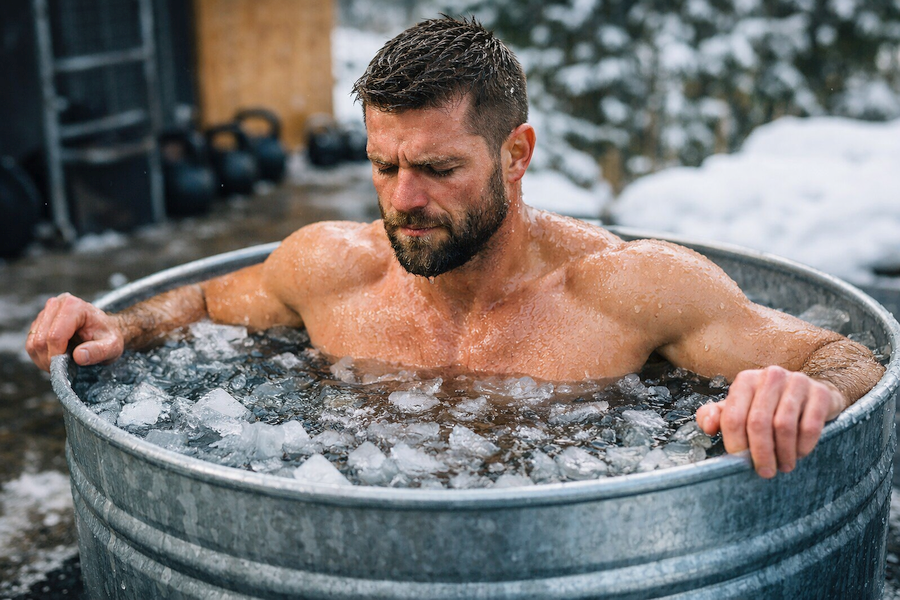
Cold exposure may give testosterone a short-term nudge, mostly by lowering stress hormones and improving recovery. Ice baths and cold showers might help indirectly, especially if they improve sleep, reduce inflammation, or increase motivation. Still, the long-term hormone effects appear modest and vary a lot from person to person.
Cold exposure is having a moment. Ice baths are everywhere – social media, gyms, podcasts, even backyard stock tanks. The promise is usually the same: better recovery, sharper focus, mental toughness… and sometimes higher testosterone.
If you’re a guy thinking about testosterone (energy, muscle, libido, confidence) it’s fair to ask: does freezing yourself actually help your hormones, or is this just another trend?
Let’s walk through what cold exposure does in the body, how testosterone works, what the research seems to suggest (with some hesitation), and whether this is worth adding to your routine.
No hype. No biohacker jargon. Just a clear look at what’s likely going on.
What Counts as Cold Exposure?
Cold exposure is a broad term. It’s not just ice baths.
Common forms include:
- Ice baths or cold plunges (usually 50 – 59°F / 10 – 15°C)
- Cold showers
- Cold outdoor exposure (winter swims, cold-weather walks)
- Cryotherapy (very short, very cold sessions)
Most hormone discussions focus on cold water immersion, since it’s intense and well-studied compared to quick cold showers.
A typical ice bath lasts 2 to 10 minutes. Longer isn’t always better, and for some people, it’s actually counterproductive.
Testosterone’s Function: A Quick Refresher
Testosterone isn’t just about muscle or sex drive. It affects a lot more than most people realize.
Key roles include:
- Supporting muscle mass and strength
- Helping regulate fat distribution
- Influencing mood, motivation, and confidence
- Supporting bone density
- Playing a role in libido and sperm production
Levels naturally peak in early adulthood and slowly decline with age. Stress, poor sleep, excess body fat, illness, and overtraining can push levels down faster.
That’s where cold exposure enters the conversation.
The Stress – Testosterone Connection
Here’s an important piece that often gets overlooked:
Testosterone and cortisol don’t get along very well.
Cortisol is your main stress hormone. It rises when you’re under pressure – work stress, poor sleep, intense training, calorie restriction, or emotional strain.
High cortisol over time may:
- Suppress testosterone production
- Interfere with muscle growth
- Worsen sleep quality
- Increase fat storage
Cold exposure causes a short-term stress response, but paradoxically, regular cold exposure may lower baseline stress over time.
That’s one reason people feel calmer and clearer after a cold plunge – even though it’s uncomfortable in the moment.
See Also: How Stress Can Wreck Your Testosterone Levels

Does Cold Exposure Increase Testosterone Directly?
This is where things get nuanced.
Short-Term Effects
Some small studies suggest that acute cold exposure may temporarily increase testosterone, or at least prevent it from dropping after hard training (1,2).
In other words:
- Testosterone might not spike dramatically
- But it may stay more stable under stress
This is especially relevant for men who train hard or overtrain.
Long-Term Effects
When it comes to long-term testosterone increases, the evidence is mixed.
Some research suggests:
- No major sustained rise in testosterone
- Benefits may depend on frequency, duration, and overall lifestyle
Cold exposure alone doesn’t seem to override poor sleep, a bad diet, or chronic stress. So if you’re expecting ice baths to replace good habits, you’ll probably be disappointed.

Cold Exposure, Inflammation, and Hormones
Inflammation plays a quiet but important role in hormone health.
Chronic inflammation may:
- Disrupt signaling between the brain and testes
- Increase cortisol
- Interfere with muscle recovery
Cold exposure appears to reduce perceived soreness and inflammatory markers, at least short term (3).
Better recovery may allow:
- More consistent training
- Better sleep
- Lower overall stress load
And all of those can support healthier testosterone levels indirectly.
That “indirect” part matters a lot.
The Sleep Factor (Underrated but Huge)
If there’s one area where cold exposure may help testosterone the most, it’s sleep. Many people report:
- Falling asleep faster
- Deeper sleep
- Less nighttime restlessness
Lower body temperature before bed is a natural sleep signal. Cold exposure earlier in the evening may enhance that effect.
Poor sleep is strongly linked to lower testosterone – sometimes within just a few nights (4).
So if cold exposure improves your sleep, it may help preserve testosterone more than it boosts it outright.

Cold Exposure and Motivation: A Real-World Effect
Here’s where personal experience often enters the picture.
Cold exposure forces you to:
- Control your breathing
- Stay calm under stress
- Do something uncomfortable on purpose
That may sound psychological, but it ties into hormones.
Regular cold exposure appears to increase dopamine sensitivity, which affects motivation and drive (5).
While dopamine isn’t testosterone, the two often rise and fall together in real life.
Men who feel more motivated tend to:
- Train more consistently
- Eat better
- Sleep better
- Stay leaner
Those behaviors matter more than any single hack.
What About Cold Exposure and Sperm Health?
This one deserves caution.
The testes need to stay slightly cooler than core body temperature. That’s why they’re outside the body in the first place.
Mild cooling may support sperm production, but extreme or prolonged cold could be stressful.
Some research suggests cold exposure may:
- Improve sperm motility in some cases
- Have neutral or unclear effects in others (6)
There’s no strong evidence that frequent ice baths dramatically improve fertility. Moderation seems key.
Ice Baths vs Cold Showers: Does It Matter?
Yes – intensity matters.
Cold showers
- Easier to maintain
- Less intense stress response
- More practical for daily use
Ice baths
- Stronger physiological response
- More recovery-focused
- Easier to overdo
For hormone health, cold showers may be enough for most people. Ice baths might be useful during heavy training phases, but they’re not mandatory.
Can Cold Exposure Backfire?
Absolutely. This part rarely gets discussed.
Too much cold exposure may:
- Increase cortisol if you’re already stressed
- Worsen fatigue
- Interfere with muscle growth if done right after strength training
- Feel mentally draining instead of energizing
If you’re under-eating, overtraining, or sleeping poorly, cold exposure might add stress instead of reducing it. Your response matters more than the protocol.

Who Might Benefit the Most?
Cold exposure may be more helpful if you:
- Train intensely or frequently
- Struggle with stress or anxiety
- Have trouble sleeping
- Feel mentally sluggish or unmotivated
- Recover slowly from workouts
It may be less helpful if you:
- Are already burned out
- Have low body fat
- Are chronically cold
- Have thyroid or circulation issues
Context matters.
A Practical Way to Try It (Without Overdoing It)
If you’re curious, here’s a reasonable starting point:
Option 1: Cold Showers
- 30 – 60 seconds at the end of a normal shower
- 3 – 5 times per week
- Focus on calm breathing
Option 2: Ice Baths
- 2 – 5 minutes
- 1 – 3 times per week
- Not immediately after heavy lifting
Pay attention to:
- Sleep quality
- Mood
- Energy
- Training recovery
If those improve, you’re probably on the right track.

So… Do Ice Baths Boost Testosterone?
The honest answer?
Not directly in a dramatic way – but they may help support a lifestyle that keeps testosterone healthier over time.
Cold exposure:
- May reduce stress
- May improve sleep
- May enhance recovery
- May improve motivation
All of those matter for hormones.
If you enjoy it and recover well, it can be a useful tool. If you hate it or feel worse afterward, it’s probably not worth forcing.
Sometimes the best “testosterone booster” is simply doing things that make your body feel resilient instead of overwhelmed.


Jim is the founder of Andro HQ and a self-taught supplement reviewer with over 12 years of personal testing experience. He has evaluated more than 150 bodybuilding products and specializes in identifying effective, science-backed alternatives to banned substances. His insights are grounded in real-world use, documented trials, and continuous experimentation in the gym. While not a licensed health professional, Jim aims to help readers navigate the often-confusing supplement market through honest, evidence-informed reviews. More about this author…