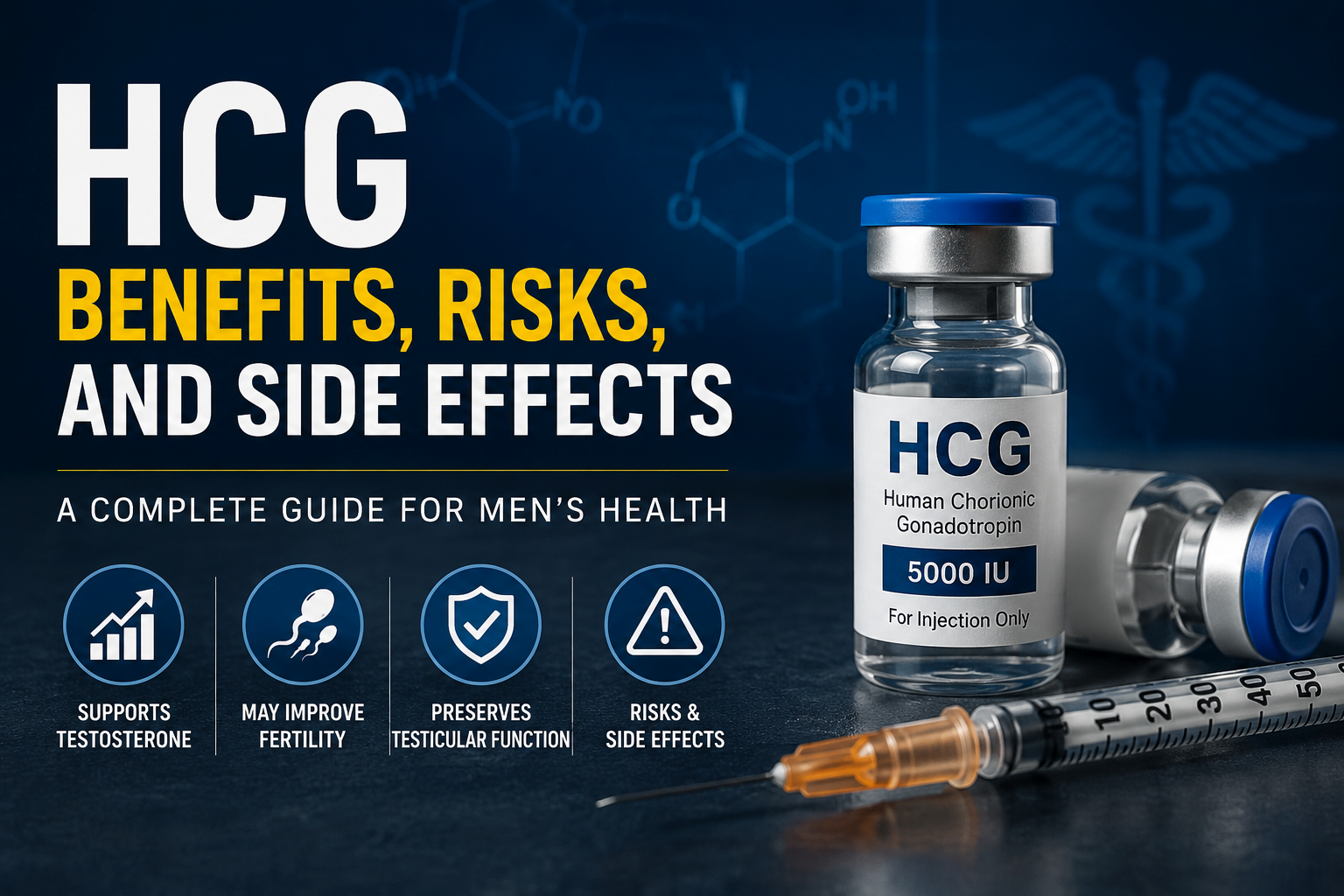
Human chorionic gonadotropin (HCG) is a hormone best known for its role in pregnancy, but it also has several medical uses in men. Doctors may prescribe HCG to help support testosterone production, fertility, and testicular function, particularly in men with hypogonadism or those receiving testosterone replacement therapy (TRT). While HCG can be effective when used correctly, it isn’t without risks. Side effects may include gynecomastia, acne, fluid retention, mood changes, and elevated estrogen levels. HCG should only be used under medical supervision and isn’t considered a safe or effective weight-loss treatment despite claims you’ll find online.
For years, HCG has occupied an unusual place in men’s health. Depending on who you ask, it’s either an essential part of hormone therapy or an outdated treatment surrounded by misinformation. The truth is somewhere in the middle.
When prescribed appropriately, HCG has a well-established role in modern medicine. It can help maintain the body’s own testosterone production, preserve fertility, and prevent some of the unwanted effects of testosterone therapy. At the same time, many of the bold claims surrounding HCG (especially for fat loss and bodybuilding) simply aren’t supported by good evidence.
If you’re considering HCG or your doctor has recommended it, it’s worth understanding both the potential benefits and the possible downsides before getting started.
What Is HCG?
Human chorionic gonadotropin (HCG) is a hormone naturally produced during pregnancy by cells that eventually form the placenta. In women, it helps maintain progesterone production during the early stages of pregnancy. It’s also the hormone detected by pregnancy tests.
In men, however, HCG serves a very different purpose. Its structure closely resembles luteinizing hormone (LH), one of the hormones produced by the pituitary gland. Because of this similarity, HCG can bind to LH receptors in the testes and stimulate the Leydig cells to produce testosterone (1).
Unlike many over-the-counter testosterone boosters, HCG doesn’t supply testosterone directly. Instead, it encourages your own testes to continue making it naturally.
If you’d like to learn more about the role testosterone plays throughout the body, see our guide to What Is Testosterone?.

How Does HCG Work?
To understand HCG, it helps to know how the body’s hormone system normally functions.
The hypothalamus signals the pituitary gland, which releases LH and follicle-stimulating hormone (FSH). LH tells the testes to produce testosterone, while FSH supports sperm production.
When a man begins testosterone replacement therapy (TRT), his brain detects higher testosterone levels and reduces its own LH production through negative feedback. As a result, the testes receive less stimulation and may gradually shrink while producing less testosterone and fewer sperm.
That’s where HCG comes in.
Because it mimics LH, HCG continues stimulating the testes even while natural LH levels remain low. This may help preserve:
- Natural testosterone production
- Testicular size
- Sperm production
- Fertility
Many hormone specialists now prescribe HCG alongside TRT for men who wish to maintain fertility or minimize testicular atrophy. If you’re new to hormone therapy, our TRT (Testosterone Replacement Therapy) Guide explains how testosterone therapy works and who may be a candidate.
Potential Benefits of HCG
While HCG isn’t appropriate for everyone, research suggests it may provide several important benefits in carefully selected patients.
1. Helps Maintain Testosterone Production
Perhaps the biggest advantage of HCG is that it stimulates the body’s own testosterone production instead of replacing it outright. In men whose testes are capable of functioning normally, HCG may significantly increase testosterone levels by activating the same receptors as LH (2).
This makes it useful for men with certain forms of secondary hypogonadism, where the testes themselves remain healthy but aren’t receiving enough hormonal stimulation.

2. May Preserve Fertility
One of the most common reasons men use HCG is fertility preservation. Testosterone injections alone often suppress sperm production, sometimes dramatically. Although this effect isn’t always permanent, it can make conception difficult while treatment continues.
Adding HCG appears to help maintain testicular function and sperm production in many men receiving TRT (3). That’s one reason fertility specialists frequently include HCG as part of treatment plans for younger men who still hope to have children.
3. Helps Prevent Testicular Shrinkage
Many men notice reduced testicular size after several months of testosterone therapy. Although this change is usually harmless medically, it can be uncomfortable psychologically or physically.
Because HCG continues stimulating the testes, it often helps reduce or prevent this shrinkage by maintaining normal activity within the testicular tissue (4).
4. May Improve Symptoms of Low Testosterone
When testosterone levels increase appropriately, some men report improvements in symptoms such as:
- Energy levels
- Libido
- Erectile function
- Mood
- Motivation
- Overall sense of well-being
It’s worth remembering, though, that these improvements aren’t guaranteed. Hormone balance is complex, and factors such as sleep, stress, nutrition, obesity, thyroid health, and chronic illness also influence how someone feels.
If you’re unsure whether low testosterone may be affecting you, our article on Low Testosterone: Symptoms, Causes, and Treatments covers the warning signs in more detail.
5. May Support Recovery After Anabolic Steroid Use
HCG has also become popular in post-cycle therapy (PCT) among anabolic steroid users. After a steroid cycle, the body’s natural testosterone production is often heavily suppressed. Some physicians may prescribe HCG to help reactivate the testes before transitioning to other medications such as selective estrogen receptor modulators (SERMs).
That said, HCG isn’t appropriate for every post-cycle protocol. Using it incorrectly—or for too long—may actually delay the body’s recovery in some cases. For a more detailed discussion, see our guide to Post Cycle Therapy (PCT).

Who Might Benefit Most From HCG?
HCG isn’t a general wellness supplement. Instead, it’s typically reserved for specific medical situations.
| Potential Candidate | Why HCG May Help |
|---|---|
| Men with secondary hypogonadism | Stimulates natural testosterone production |
| Men on TRT wanting children | Helps preserve fertility |
| Men experiencing testicular shrinkage during TRT | Maintains testicular stimulation |
| Certain infertility patients | Supports sperm production as part of fertility treatment |
| Some post-cycle therapy patients | May assist recovery under medical supervision |
On the other hand, HCG is unlikely to benefit healthy men with normal hormone levels. Taking hormones when they aren’t medically necessary can upset the body’s natural balance and increase the risk of unwanted side effects.
Another point that’s often overlooked is that more isn’t always better. Higher doses don’t necessarily produce better results and may increase estrogen levels along with the likelihood of side effects.
Potential Risks and Side Effects of HCG
Like any hormone therapy, HCG can produce unwanted effects. Most side effects are manageable when treatment is supervised by a healthcare provider, but they shouldn’t be ignored.
The likelihood of experiencing side effects often depends on the dose, treatment duration, and an individual’s hormone balance.
Common Side Effects
Some of the more frequently reported side effects include:
- Headaches
- Acne or oily skin
- Injection site pain or redness
- Mood swings or irritability
- Fatigue
- Fluid retention
- Breast tenderness
Many of these symptoms are related to changes in hormone levels rather than HCG itself.

Increased Estrogen Levels
One of the more significant concerns is that higher testosterone production may also lead to greater estrogen production through a process called aromatization. As estrogen rises, some men may experience:
- Gynecomastia (enlarged breast tissue)
- Water retention
- Mood changes
- Reduced libido
- Emotional sensitivity
This doesn’t happen to everyone, and the degree varies considerably between individuals. In some cases, physicians adjust the HCG dose or prescribe other medications if estrogen becomes excessively elevated (5).
If you’d like to learn more, our guide on Estrogen in Men: Symptoms, Causes, and How to Balance Naturally explains why estrogen isn’t the enemy—it simply needs to stay in balance.
Gynecomastia
Because HCG can indirectly increase estrogen, gynecomastia deserves special mention. Gynecomastia occurs when breast tissue enlarges in response to hormonal changes. Early symptoms may include tenderness, swelling beneath the nipple, or a small rubbery lump.
Not every man taking HCG develops gynecomastia, but those already prone to estrogen-related side effects may have a higher risk.
Multiple Births in Women
Although this article focuses on men’s health, it’s worth mentioning that HCG is also used in female fertility treatment. When combined with fertility medications, HCG increases the chance of releasing multiple eggs, which raises the likelihood of twins or higher-order multiple pregnancies (6).
Rare but Serious Risks
Serious complications are uncommon but may include:
- Severe allergic reactions
- Blood clots
- Ovarian hyperstimulation syndrome (in women)
- Significant hormone imbalances
Anyone experiencing chest pain, difficulty breathing, severe swelling, or sudden neurological symptoms should seek immediate medical attention.

HCG and Weight Loss: Does It Really Work?
One of the biggest myths surrounding HCG is that it promotes rapid fat loss. This idea became popular decades ago after a physician proposed combining HCG injections with an extremely low-calorie diet. Since then, countless HCG diet products have appeared online.
The problem is that the evidence doesn’t support these claims. Most clinical studies have found that HCG itself doesn’t meaningfully increase fat loss, reduce hunger, or change body composition compared with placebo. The weight loss people experience on HCG diets is almost entirely explained by consuming only 500–800 calories per day (7).
Because of the lack of evidence, the U.S. Food and Drug Administration (FDA) has warned consumers about over-the-counter HCG products marketed for weight loss. If your goal is improving body composition, focusing on nutrition, resistance training, adequate protein intake, and sustainable calorie control remains a far better long-term strategy.
General Dosage Information
HCG dosing varies considerably depending on why it’s being prescribed. Some common medical uses include:
| Purpose | Typical Physician-Prescribed Dose |
|---|---|
| Fertility preservation during TRT | 250–500 IU two to three times weekly |
| Secondary hypogonadism | Often 1,000–2,000 IU two to three times weekly |
| Male infertility | Individualized based on fertility specialist recommendations |
These are only general examples. Actual treatment plans differ depending on hormone levels, fertility goals, age, and overall health.
HCG is administered by subcutaneous or intramuscular injection, and regular blood work is usually recommended to monitor testosterone, estradiol, and other hormones throughout treatment.

HCG vs. Testosterone Replacement Therapy
Although they’re sometimes discussed together, HCG and TRT aren’t the same thing.
| HCG | TRT |
|---|---|
| Stimulates your own testosterone production | Replaces testosterone directly |
| Preserves testicular activity | Usually suppresses natural production |
| May help maintain fertility | Often reduces sperm production |
| Best for selected patients with functioning testes | Often used when natural production is insufficient |
For some men, physicians prescribe both therapies together. The goal is to provide adequate testosterone while also maintaining fertility and minimizing testicular atrophy.
The best approach depends on your symptoms, blood work, future family plans, and underlying cause of low testosterone.
Who Should Avoid HCG?
HCG isn’t appropriate for everyone. Your doctor may advise against HCG if you have:
- Certain hormone-sensitive cancers
- An allergy to HCG products
- Untreated prostate cancer
- Certain pituitary or endocrine disorders
- Medical conditions where hormone therapy may pose additional risks
A thorough medical evaluation is important before beginning any hormone treatment.

Final Thoughts
HCG has earned an important place in men’s hormone therapy, but it’s also one of the more misunderstood medications.
For men with secondary hypogonadism, fertility concerns, or those undergoing TRT, HCG may help preserve natural testosterone production, maintain sperm production, and reduce testicular shrinkage. Those are legitimate, evidence-based medical uses that have been studied for years.
At the same time, it’s easy to find exaggerated claims online. HCG isn’t a miracle muscle builder, nor is it the magic weight-loss hormone it’s often advertised to be. Most of those promises simply don’t hold up under careful scientific scrutiny.
If there’s one takeaway, it’s this: HCG works best when it’s prescribed for the right reason, monitored with appropriate blood tests, and used as part of a comprehensive treatment plan rather than as a shortcut.
Suggested Internal Links Used
The following AndroHQ articles were naturally referenced in the article using your URL list:
- What Is Testosterone?
- TRT (Testosterone Replacement Therapy) Guide
- Low Testosterone: Symptoms, Causes, and Treatments
- Post Cycle Therapy (PCT)
- Estrogen in Men: Symptoms, Causes, and How to Balance Naturally


Jim is the founder of Andro HQ and a self-taught supplement reviewer with over 12 years of personal testing experience. He has evaluated more than 150 bodybuilding products and specializes in identifying effective, science-backed alternatives to banned substances. His insights are grounded in real-world use, documented trials, and continuous experimentation in the gym. While not a licensed health professional, Jim aims to help readers navigate the often-confusing supplement market through honest, evidence-informed reviews. More about this author…