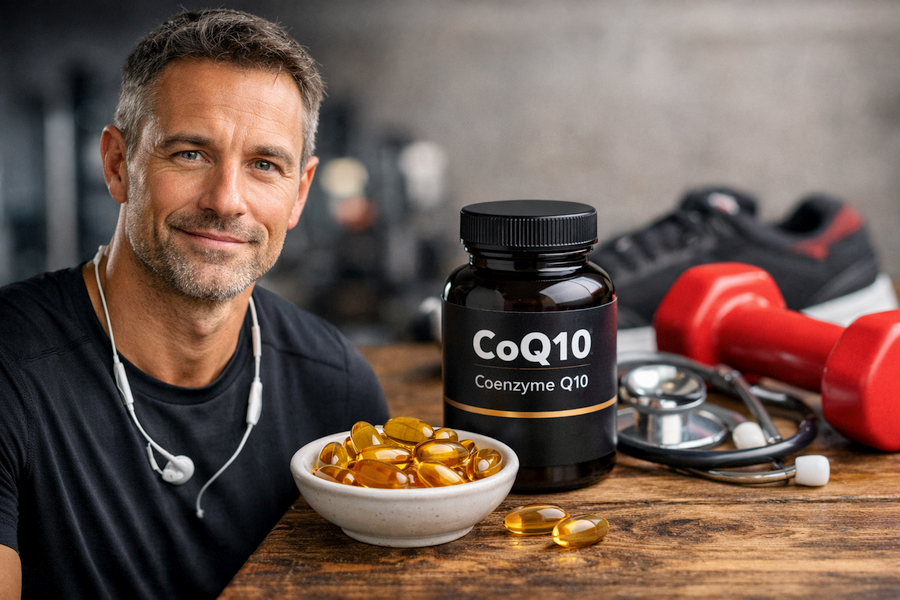
CoQ10 (Coenzyme Q10) is a natural compound your body makes to help produce energy inside your cells. For men, it may support heart health, sperm quality, exercise performance, energy levels, and healthy aging. Some research suggests it could also help reduce oxidative stress and improve recovery (1,2). While it’s not a magic pill, CoQ10 appears to be a solid, low-risk supplement for men – especially those over 30 or on statin medications.
If you’ve ever felt like your energy just isn’t what it used to be, you’re not alone. A lot of guys hit their 30s or 40s and start noticing subtle shifts. Workouts feel harder. Recovery takes longer. Libido may dip. Even mental clarity can feel slightly “off.”
Some of that is normal aging. Some of it may relate to hormones (you can read more in our guide on aging and testosterone levels). And some of it could come down to something much simpler: cellular energy production.
That’s where CoQ10 comes in.
Let’s break down what it is, what it does, and whether it’s worth your attention.
What Is CoQ10?
CoQ10 stands for Coenzyme Q10. It’s a fat-soluble compound found in almost every cell in your body. It plays a central role in the mitochondria, which are often called the “power plants” of your cells.
Without CoQ10, your body would struggle to produce ATP (adenosine triphosphate) – the molecule that fuels nearly everything you do.
Think of it like this:
- Food = raw fuel
- Mitochondria = engine
- CoQ10 = spark plug
No spark plug? The engine sputters.
Your body makes CoQ10 naturally. But production appears to decline with age (3). Levels may also drop in men who:
- Take statins
- Have heart disease
- Deal with chronic stress
- Train intensely
That decline is one reason supplementation has become popular.

CoQ10 and Heart Health
Let’s start with the big one: cardiovascular health.
Your heart is one of the most energy-demanding organs in your body. It beats about 100,000 times per day. That’s a lot of ATP.
Research suggests CoQ10 may help support heart function, particularly in men with existing heart conditions (1). Some studies show improved ejection fraction and reduced symptoms in people with heart failure.
There’s also evidence that CoQ10 may help reduce oxidative stress in blood vessels (4). That matters because oxidative stress can damage the lining of arteries over time.
Now, is CoQ10 a replacement for diet, exercise, and blood pressure control? No. Not even close.
But if you’re already working on your cholesterol, managing stress, and eating better, CoQ10 may act as an added layer of support.
It’s especially relevant for men on statins. Statins reduce cholesterol, but they also reduce CoQ10 levels in the body (5). That may partly explain why some men report muscle aches while taking them.
In those cases, CoQ10 supplementation may help, though the research is mixed.
Energy and Fatigue
This is where things get interesting.
Because CoQ10 is directly involved in ATP production, low levels may contribute to fatigue. Some studies suggest supplementation may reduce tiredness in certain populations (6).
I’ve personally noticed that when I’m under high stress – poor sleep, heavy training, long workdays – my baseline energy drops. Not dramatically. Just enough to feel “off.”
CoQ10 isn’t like caffeine. It doesn’t hit you in 30 minutes. It works more gradually. If it helps, it tends to show up over weeks, not hours.
For men juggling work, family, and training, that subtle energy support may be meaningful.
Still, if you’re chronically exhausted, it’s smart to rule out other issues first. Low testosterone, poor sleep, or high cortisol may be bigger factors (see our guide on how stress affects testosterone).

Exercise Performance and Recovery
Athletes and lifters often look at CoQ10 for performance.
Some research suggests it may:
- Improve endurance capacity
- Reduce exercise-induced oxidative stress
- Support faster recovery (7)
But here’s the nuance.
The effects seem modest. We’re not talking steroid-level changes. It’s more like a small efficiency boost in your cells’ energy systems.
That said, over months of consistent training, even small improvements in recovery can add up.
If you’re already optimizing sleep, protein intake, and micronutrients, CoQ10 might be the icing on the cake.
Sperm Health and Fertility
This is one area where CoQ10 may shine for men.
Sperm cells require a lot of energy. They also contain a high number of mitochondria. That makes them especially sensitive to oxidative stress.
Several studies suggest CoQ10 supplementation may improve:
- Sperm motility
- Sperm concentration
- Overall sperm quality (8)
It appears to act both as an energy booster and as an antioxidant.
If you’re trying to conceive and looking at natural strategies before medical interventions, CoQ10 could be worth discussing with your doctor.
Of course, it’s just one piece. Lifestyle matters a lot. Sleep, weight management, and hormone balance all play roles. You might also look into other supportive nutrients like zinc (see: Zinc Benefits for Men – Boosting Immunity, Testosterone, and Fertility).

Testosterone and Hormonal Health
Here’s where people sometimes overhype things.
CoQ10 is not a direct testosterone booster like some herbal ingredients claim to be.
That said, reducing oxidative stress and improving mitochondrial efficiency may indirectly support overall hormonal health.
Some small studies suggest improved sperm parameters and testicular function in certain groups (8). But large-scale data showing dramatic testosterone increases? Not really.
If testosterone is your primary concern, you might want to start with lifestyle basics and understand the bigger picture. Our article on low testosterone symptoms, causes, and treatments is a helpful place to begin.
Still, supporting cellular energy can support the whole system. Hormones don’t operate in isolation.
CoQ10 and Aging
Aging often comes down to cumulative damage. Oxidative stress builds up over time. Mitochondria become less efficient.
CoQ10 acts as both:
- An energy-support molecule
- A fat-soluble antioxidant
Some researchers suggest this dual role may help slow aspects of cellular aging (9).
Now, let’s be realistic.
CoQ10 won’t make you 25 again. But it may help your cells function a bit more efficiently as you age.
For men in their 40s and beyond, that subtle edge might matter more than it would at 22.
Forms of CoQ10: Ubiquinone vs Ubiquinol
There are two main forms:
| Form | Description | Who Might Prefer It |
|---|---|---|
| Ubiquinone | Oxidized form, more common and cheaper | Younger men, budget-conscious |
| Ubiquinol | Reduced form, more bioavailable | Older men, those with absorption issues |
Ubiquinol appears to be absorbed better, especially in older adults (10). But it also costs more.
For a healthy 30-year-old, standard ubiquinone may be fine. For a 55-year-old with heart concerns, ubiquinol might make more sense.
Dosage and Safety
Most studies use doses between 100–300 mg per day.
CoQ10 is generally considered safe and well tolerated. Side effects are rare but may include:
- Mild stomach upset
- Nausea
- Headache
It’s fat-soluble, so it’s best taken with a meal containing healthy fats.
If you’re on blood thinners or statins, talk to your doctor first. CoQ10 can interact with certain medications.
Who Should Consider CoQ10?
You might consider it if you:
- Are over 35
- Take statins
- Have cardiovascular concerns
- Train hard and want better recovery
- Are trying to improve sperm quality
- Feel chronically low in energy
If you’re young, healthy, and eating well? You may not notice much difference.
Supplements should fill gaps, not replace basics.
CoQ10 vs Other “Energy” Supplements
Some men stack CoQ10 with ingredients like:
- Creatine
- Rhodiola
- Ashwagandha
- L-carnitine
Each works differently. For example, adaptogens like rhodiola may help stress resilience (see our guide here), while creatine directly supports ATP regeneration.
CoQ10 works upstream in the mitochondrial process.
If your sleep is poor, your stress is high, and your diet is junk, no supplement will fix that.
But if you’ve handled those foundations, CoQ10 can fit nicely into a well-designed stack.
Realistic Expectations
Let’s keep this grounded.
You’re unlikely to feel a dramatic surge of energy in 48 hours. It’s not caffeine. It’s not a stimulant.
What you might notice after 4–8 weeks:
- Slightly better stamina
- Less post-workout fatigue
- Improved mental clarity
- Better overall “baseline” energy
Some men report nothing at all. That doesn’t mean it’s useless – it may just mean you weren’t deficient to begin with.
Bio-individuality matters.

Food Sources of CoQ10
You can get small amounts from food:
- Organ meats (heart, liver)
- Fatty fish
- Beef
- Nuts
But dietary intake is relatively low compared to supplemental doses.
To get 100 mg from food alone, you’d need unrealistic amounts.
Final Thoughts
CoQ10 isn’t flashy. It doesn’t promise explosive muscle growth or overnight testosterone spikes.
What it does offer is something quieter: cellular support.
For men focused on:
- Heart health
- Fertility
- Recovery
- Long-term energy
…it may be a smart addition.
Is it essential for everyone? Probably not.
But for men over 35 – or anyone on statins or dealing with persistent fatigue – it appears to be a low-risk, potentially high-upside supplement.
Like most things in health, it works best when layered on top of:
- Good sleep
- Strength training
- Whole-food nutrition
- Stress management
If those pillars are in place, CoQ10 might help your engine run just a little smoother.
And sometimes, that’s exactly what you need.


Jim is the founder of Andro HQ and a self-taught supplement reviewer with over 12 years of personal testing experience. He has evaluated more than 150 bodybuilding products and specializes in identifying effective, science-backed alternatives to banned substances. His insights are grounded in real-world use, documented trials, and continuous experimentation in the gym. While not a licensed health professional, Jim aims to help readers navigate the often-confusing supplement market through honest, evidence-informed reviews. More about this author…