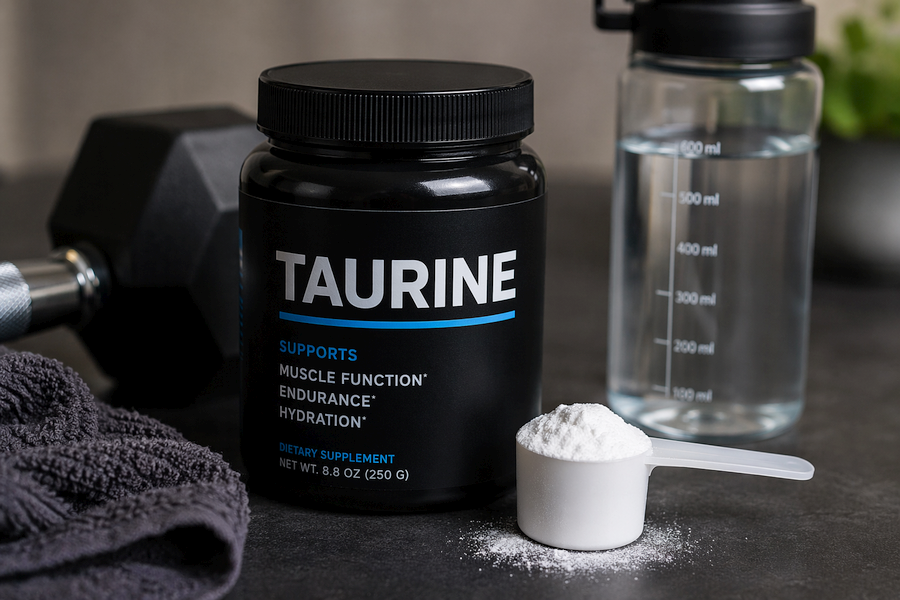
Taurine is a conditionally essential amino acid that supports hydration, muscle function, heart health, and possibly testosterone balance. It may help improve workout performance, reduce fatigue, and support recovery, though its direct impact on testosterone appears modest rather than dramatic.
If you’ve ever looked at the label of an energy drink, chances are you’ve seen taurine listed near the top. It’s often grouped with caffeine and other stimulants, which makes it easy to assume taurine is just another “energy booster.”
That’s not really accurate.
Taurine is actually quite different. It doesn’t act like a stimulant at all. In fact, it may even have a calming effect on the nervous system. And once you look a little closer, it becomes clear that taurine plays a surprisingly wide role in the body – from hydration and muscle function to heart health and possibly hormone balance.
I’ll admit, I used to think taurine was just filler in supplements. But the more I looked into it, the more it seemed like one of those quiet, underrated compounds that might be doing more behind the scenes than people realize.
What Is Taurine?
Taurine is a type of amino acid, but it’s not used to build proteins like most others. Instead, it exists freely in tissues, especially in the brain, heart, and muscles.
Your body can make taurine from other amino acids like cysteine and methionine, which is why it’s considered “conditionally essential.” Under normal conditions, you may produce enough. But during stress, illness, or heavy physical activity, your needs may go up.
You also get taurine from foods, mostly animal-based ones like:
- Meat
- Fish
- Dairy
Plant-based diets tend to be much lower in taurine, which may explain why some vegans choose to supplement it.
Effects On Muscle Performance
This is where taurine starts to get interesting for guys focused on fitness. Taurine appears to play a role in muscle contraction and hydration. It helps regulate calcium levels in muscle cells, which is essential for proper movement and force production (1).
Some research suggests taurine may:
- Improve endurance
- Reduce muscle fatigue
- Support recovery after exercise
It may also act as an antioxidant, helping reduce oxidative stress caused by intense workouts (2). That matters more than it sounds, since excessive oxidative stress can slow recovery and even impact hormone levels over time.
If you’ve read about other performance ingredients, like those in this guide to Top 10 Pre-Workout Ingredients, you’ll notice taurine often shows up alongside things like beta-alanine and caffeine – but its role is more about balance than stimulation.
Hydration Benefits
One of taurine’s most overlooked roles is its effect on hydration. It helps regulate electrolytes and fluid balance inside cells. That means it may support:
- Better muscle function
- Improved endurance
- Reduced cramping
This ties closely with what’s discussed in our breakdown of electrolytes: Electrolytes – Their Impact on Performance & How to Avoid Imbalances.
Without proper hydration at the cellular level, performance drops quickly. Taurine seems to help keep that system running smoothly.

Taurine and Testosterone
Now let’s talk about what most readers here probably care about – testosterone. The relationship between taurine and testosterone isn’t completely clear. It’s not like taking taurine will suddenly spike your levels the way some people expect from supplements.
That said, there are a few indirect ways taurine may support healthy testosterone:
1. Reducing Oxidative Stress
Oxidative stress can damage Leydig cells, which are responsible for producing testosterone (3). Taurine’s antioxidant effects may help protect these cells.
2. Supporting Testicular Function
Some animal studies suggest taurine may improve testicular health and sperm quality (4). While human data is limited, the mechanism makes sense.
3. Lowering Cortisol
Chronic stress and high cortisol levels are known to suppress testosterone. Taurine may have a calming effect on the nervous system, which could help blunt that stress response.
This connects with what we covered in: How Stress Can Wreck Your Testosterone Levels.
It’s not a direct testosterone booster, but it may help create a better internal environment for hormone production.
Benefits For Heart Health
This is one of the strongest areas of research. Taurine appears to support cardiovascular health in several ways:
- Helps regulate blood pressure
- Supports healthy cholesterol levels
- Improves blood vessel function
Some studies even suggest taurine may reduce the risk of heart disease (5).
That’s worth paying attention to, especially since heart health and testosterone are more connected than most people think. Poor cardiovascular health can limit blood flow, energy levels, and overall hormonal balance.
Taurine and Energy (Without the Jitters)
This is where taurine gets misunderstood. Despite being in energy drinks, taurine doesn’t act like caffeine. It doesn’t stimulate the central nervous system in the same way.
Instead, it may help:
- Stabilize energy levels
- Reduce fatigue
- Improve focus without overstimulation
Interestingly, taurine may actually counterbalance some of caffeine’s harsher effects. So when you see both in the same product, it’s not accidental.
If you’re curious about caffeine itself, you might want to check: Caffeine Benefits For Bodybuilding and Athletic Performance.
Taurine vs Other Amino Acids
Taurine often gets lumped in with other amino acids, but it’s pretty unique. Here’s a quick comparison:
| Compound | Primary Role | Effect on Performance |
|---|---|---|
| Taurine | Hydration, cell function | Endurance, recovery |
| L-Arginine | Nitric oxide production | Blood flow, pumps |
| Creatine | ATP production | Strength, power |
If you’ve read about nitric oxide boosters like L-arginine: L-Arginine Benefits for Men.
You’ll notice taurine works differently. It’s less about immediate performance spikes and more about long-term support.

Effects On Recovery
Recovery is one of those areas where small improvements can add up over time.
Taurine may help by:
- Reducing muscle damage
- Lowering inflammation
- Supporting faster recovery between workouts
It also seems to play a role in sleep quality, which is often overlooked but critical for hormone production.
And as covered here: How Sleep Quality Affects Testosterone and Recovery.
Poor sleep can tank testosterone levels pretty quickly. If taurine helps even slightly in that area, it’s worth considering.
Food Sources of Taurine
If you prefer getting nutrients from food, taurine is mostly found in animal products. Some of the best sources include:
- Shellfish (especially scallops and mussels)
- Dark meat poultry
- Beef
- Fish
Plant foods contain little to no taurine, which may explain why supplementation is more common among plant-based diets.
Taurine Supplements: Dosage and Safety
Taurine is widely considered safe, even at relatively high doses.
Typical dosages range from:
- 500 mg to 2,000 mg per day
Some studies use higher amounts, but for general health and performance, you probably don’t need to go that far.
Side effects are rare, though extremely high doses may cause:
- Digestive discomfort
- Mild headaches
One thing to keep in mind – if you’re already consuming energy drinks, you may already be getting taurine without realizing it.

Is Taurine Worth Taking?
This depends on your goals.
If you’re looking for a dramatic testosterone boost, taurine probably won’t deliver that on its own. It’s not in the same category as stronger interventions like those discussed in: TRT Guide – Benefits, Risks, Costs & What Men Should Know.
But if your goal is overall performance, recovery, and long-term health, taurine starts to look more appealing. It’s one of those supplements that may not feel dramatic day-to-day, but could still be contributing in subtle ways.
A Balanced Perspective
It’s easy to get caught up in chasing the “next big thing” in supplements. Taurine doesn’t really fit that mold.
It’s not flashy. It doesn’t promise huge gains. And it doesn’t spike hormones overnight.
But it appears to support several systems that matter:
- Hydration
- Recovery
- Cardiovascular health
- Stress regulation
And when you think about it, those are the same systems that influence testosterone and performance over the long run.
So while taurine may not be a game-changer on its own, it could still be a useful piece of the bigger picture.
Final Thoughts
Taurine is one of those ingredients that’s easy to overlook, mostly because it doesn’t come with bold claims.
Still, the research suggests it plays a steady, supportive role in the body. It may help improve performance, protect against stress, and support overall health in ways that aren’t always obvious at first.
If you’re already dialing in your sleep, diet, and training, adding taurine might make sense. Just don’t expect miracles.
Think of it more like reinforcing the foundation rather than building a new structure.


Jim is the founder of Andro HQ and a self-taught supplement reviewer with over 12 years of personal testing experience. He has evaluated more than 150 bodybuilding products and specializes in identifying effective, science-backed alternatives to banned substances. His insights are grounded in real-world use, documented trials, and continuous experimentation in the gym. While not a licensed health professional, Jim aims to help readers navigate the often-confusing supplement market through honest, evidence-informed reviews. More about this author…