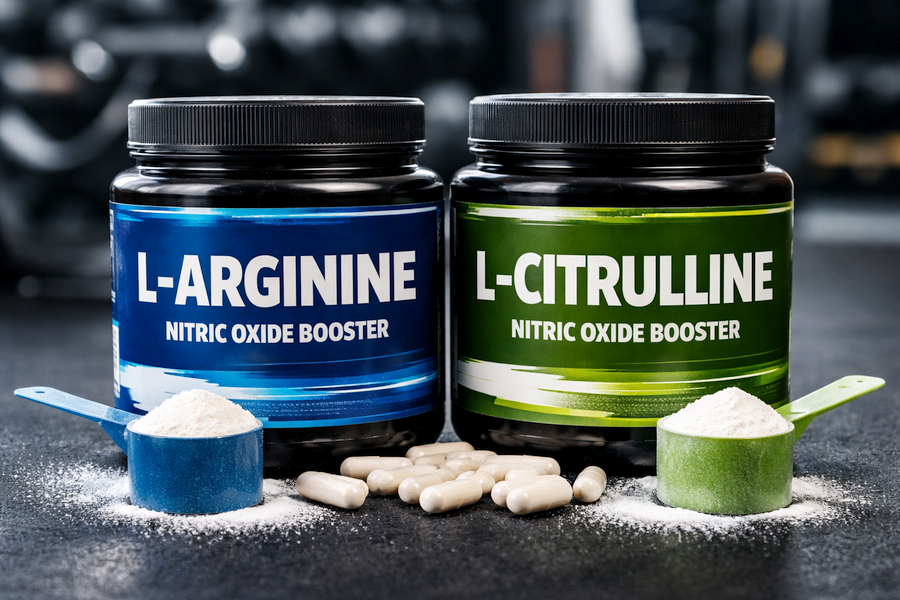
L-arginine and L-citrulline both help boost nitric oxide, which improves blood flow, workouts, and possibly erectile function. But in most cases, L-citrulline appears to work better because your body converts it into arginine more efficiently and keeps levels elevated longer. L-arginine can still be useful, especially in higher doses or combined formulas, but it may be less reliable on its own.
If you’ve spent any time looking into pre-workouts, pump supplements, or even natural ways to support performance in the bedroom, you’ve probably seen both L-arginine and L-citrulline come up again and again.
At first glance, they seem almost interchangeable. Both are amino acids. Both are tied to nitric oxide. Both are marketed for better blood flow.
So… what’s the actual difference?
I’ve gone down this rabbit hole myself, especially when trying to figure out which one actually gives that noticeable “pump” or performance boost. And the answer isn’t as straightforward as supplement labels might suggest.
Let’s break it down in a way that actually makes sense.
What Do L-Arginine and L-Citrulline Actually Do?
Both of these amino acids are connected through the same pathway in your body. Their main role is helping produce nitric oxide (NO), a molecule that relaxes blood vessels and improves circulation.
That matters because better blood flow can mean:
- Improved workout pumps
- Better endurance
- Faster recovery
- Enhanced erectile function
- Potential cardiovascular benefits
Here’s the key point: Nitric oxide is the end goal. Arginine and citrulline are just different ways to get there.

What Is L-Arginine?
L-arginine is a semi-essential amino acid your body uses directly to produce nitric oxide. When you take arginine, your body uses it right away to create nitric oxide via an enzyme called nitric oxide synthase.
That sounds ideal, right? Well… not exactly.
The Problem With L-Arginine
Here’s where things get a bit messy. When you take arginine orally, a large portion of it gets broken down in your gut and liver before it ever reaches your bloodstream (1).
This is often called “first-pass metabolism.” So even if you take a decent dose, only a fraction may actually be available to boost nitric oxide.
That’s why some people take very high doses (sometimes 6 grams or more) to try and get noticeable effects.
But higher doses can come with downsides:
- Stomach discomfort
- Diarrhea
- Bloating
And even then, results can be inconsistent.
What Is L-Citrulline?
L-citrulline is another amino acid, but it works a bit differently. Instead of directly producing nitric oxide, citrulline gets converted into arginine inside your kidneys (2).
So you’re still getting arginine – but through a different route.
Why That Matters
Citrulline bypasses the heavy breakdown that arginine goes through in the digestive system. That means:
- More arginine actually enters your bloodstream
- Levels stay elevated longer
- Effects tend to be more consistent
In other words, citrulline may indirectly deliver more usable arginine than taking arginine itself. That’s a bit counterintuitive, but it’s one of the main reasons citrulline has become so popular.

L-Arginine vs. L-Citrulline: Side-by-Side Comparison
| Feature | L-Arginine | L-Citrulline |
|---|---|---|
| Direct nitric oxide production | Yes | No (converted first) |
| Absorption efficiency | Lower | Higher |
| Duration of effect | Shorter | Longer |
| Typical dose | 3–6g+ | 3–8g |
| GI side effects | More common | Less common |
| Reliability | Inconsistent | More consistent |
Which One Is Better for Workouts?
If your goal is better pumps, endurance, or overall gym performance, L-citrulline usually comes out ahead. A lot of modern pre-workouts have shifted toward citrulline malate, which combines citrulline with malic acid.
Some research suggests it may help:
- Increase reps to failure
- Reduce muscle soreness
- Improve aerobic performance (3)
That lines up with what many people report in real life. The “pump” from citrulline tends to feel stronger and last longer. Arginine, on the other hand, can work – but often feels hit or miss.
If you’re curious about stacking ingredients for performance, you might also find this breakdown of pre-workout ingredients helpful: Top 10 Pre-Workout Ingredients to Maximize Strength and Endurance

Which One Is Better for Erectile Function?
This is where things get a bit more nuanced. Both supplements can support erectile function because erections depend heavily on blood flow and nitric oxide signaling.
L-Arginine for ED
Arginine has been studied more directly in this area. Some research suggests it may help improve mild to moderate erectile dysfunction, especially when combined with other compounds (4).
But again, results are inconsistent – likely due to poor absorption.
L-Citrulline for ED
Citrulline has also shown promise, particularly because it raises arginine levels more effectively. Some small studies suggest it may improve erection hardness and satisfaction (5).
From a practical standpoint, citrulline often feels more reliable.
What About Testosterone?
This is where people sometimes get confused. Neither arginine nor citrulline directly increases testosterone in any major way.
They’re more about circulation and performance, not hormone production. If you’re looking into that side of things, you might want to explore other approaches like lifestyle changes or targeted nutrients.
Those tend to have a more direct connection to hormone balance.
See Also: Testosterone Boosting Foods That Naturally Increase T-Levels

Can You Take Both Together?
Yes – and a lot of people do. In fact, combining them can make sense:
- Citrulline raises baseline arginine levels
- Arginine provides a more immediate nitric oxide boost
That said, many experts feel that citrulline alone is often enough. Adding arginine might give a slight extra edge, but it’s not always necessary.
Dosage Guidelines
Here’s what you’ll usually see recommended:
L-Arginine
- 3 to 6 grams per day
- Split doses may reduce stomach issues
L-Citrulline
- 3 to 6 grams daily (pure citrulline)
- 6 to 8 grams if using citrulline malate
Timing-wise, taking it 30–60 minutes before a workout tends to work well.
Natural Food Sources
If you’re not big on supplements, both amino acids can be found in food – though not always in high enough amounts for noticeable effects.
Arginine-rich foods:
- Nuts (especially walnuts, almonds)
- Seeds
- Meat and poultry
- Dairy
Citrulline-rich foods:
- Watermelon (one of the best natural sources)
- Cucumbers
- Squash
Still, you’d likely need large portions to match supplement doses.

Potential Side Effects
Both supplements are generally considered safe for healthy individuals. That said, there are a few things to keep in mind:
L-Arginine
- More likely to cause GI issues
- May lower blood pressure
- Could interact with medications
L-Citrulline
- Usually well tolerated
- Mild digestive issues possible at very high doses
If you have underlying health conditions, especially heart-related, it’s worth checking with a doctor first.
A More Realistic Take (What Most Articles Don’t Say)
Here’s something that doesn’t always get mentioned. While both supplements can help, they’re not a standalone solution.
If your sleep is off, your diet is poor, or your training is inconsistent, neither arginine nor citrulline is going to fix that. For example, things like recovery and sleep quality may play a bigger role than any supplement: How Sleep Quality Affects Testosterone and Recovery
And honestly, I’ve noticed that when those basics are dialed in, even smaller doses of citrulline seem to work better.
So… Which One Should You Choose?
If you want a simple answer:
- Choose L-citrulline if you want better overall results, fewer side effects, and more reliable nitric oxide support.
- Choose L-arginine if you’re experimenting, stacking supplements, or targeting specific protocols.
- Use both if you want to cover all bases – but it’s not always necessary.

Final Thoughts
L-arginine and L-citrulline are closely related, but they’re not equal. Arginine works directly, but it’s limited by poor absorption. Citrulline works indirectly, but often ends up being more effective because it bypasses that limitation.
That’s why, in most real-world situations, L-citrulline tends to come out ahead. Still, there’s room for both depending on your goals.
And like most supplements, they work best when they’re part of a bigger picture – not the whole strategy.


Jim is the founder of Andro HQ and a self-taught supplement reviewer with over 12 years of personal testing experience. He has evaluated more than 150 bodybuilding products and specializes in identifying effective, science-backed alternatives to banned substances. His insights are grounded in real-world use, documented trials, and continuous experimentation in the gym. While not a licensed health professional, Jim aims to help readers navigate the often-confusing supplement market through honest, evidence-informed reviews. More about this author…