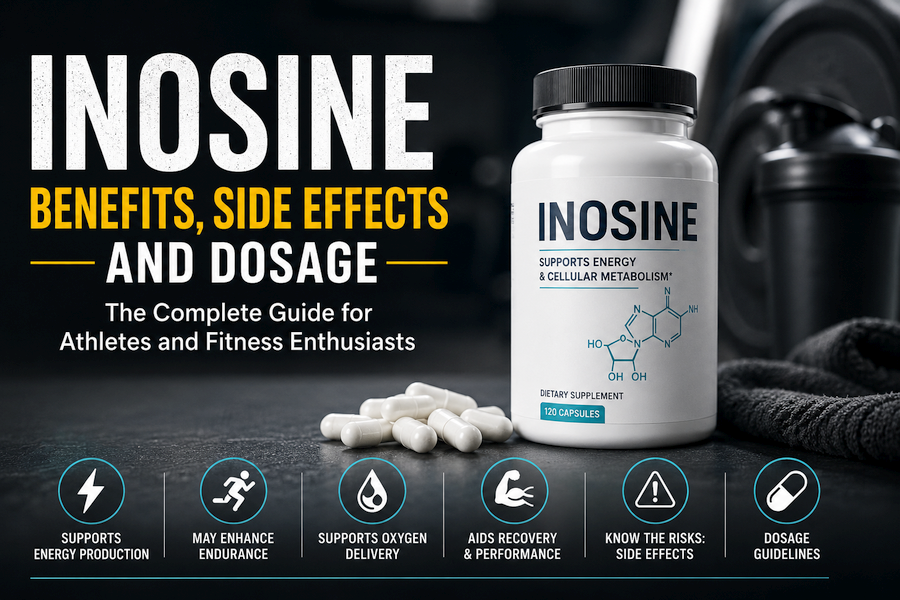
Inosine is a naturally occurring purine nucleoside involved in cellular metabolism. It has been promoted as a sports supplement for improving energy production, oxygen delivery, endurance, and recovery. The biological theory is interesting, but human exercise studies haven’t shown a convincing performance benefit. Inosine also raises uric acid, which may increase the risk of gout and kidney stones in susceptible people. For athletes, it’s probably better viewed as an experimental supplement than a proven ergogenic aid.
If you’ve spent much time looking at sports supplements, you’ve probably seen plenty of familiar names: creatine, caffeine, citrulline, beta-alanine, and electrolytes. Inosine is a little different. It has been around for decades, yet it remains fairly obscure.
That doesn’t mean it lacks an interesting story. Inosine participates in purine metabolism, which connects it indirectly with the processes cells use to produce and recycle energy. That connection helped create the idea that supplemental inosine could improve athletic performance.
Unfortunately, a plausible mechanism doesn’t always translate into better workouts. Research on athletes has been surprisingly underwhelming.
What Is Inosine?
Inosine is a purine nucleoside found naturally in the human body. Chemically, it consists of the purine base hypoxanthine attached to a ribose sugar. It forms part of the body’s purine metabolism and salvage pathways (1).
That sounds complicated, but the important part for athletes is that purines are involved in cellular energy metabolism. Inosine can be broken down into hypoxanthine, while some hypoxanthine can be recycled through the purine salvage pathway to form inosine monophosphate, or IMP. IMP can then contribute to the formation of other purine nucleotides (2).
This relationship with cellular energy explains why inosine caught the attention of athletes in the first place. However, much of the inosine you swallow doesn’t simply become extra cellular energy. Inosine is also metabolized into hypoxanthine, then xanthine, and eventually uric acid (1). That last step is particularly important when considering its potential side effects.

Potential Inosine Benefits for Athletes
1. May Support Cellular Energy Metabolism
The original argument for inosine supplementation centered on ATP, or adenosine triphosphate. ATP provides the immediate energy your muscle cells need to contract.
Because inosine participates in purine metabolism, supplement manufacturers have sometimes suggested that taking extra inosine might support the body’s ability to replenish ATP during exercise.
There is a biochemical connection here, but it’s easy to oversell it. Your body already has sophisticated systems for producing and recycling ATP. Simply providing more of one purine compound doesn’t necessarily mean your muscles will produce more usable energy.
For athletes specifically interested in improving high-intensity energy production, creatine has much stronger supporting evidence.
2. Could Theoretically Improve Oxygen Delivery
Another proposed benefit involves 2,3-diphosphoglycerate, usually shortened to 2,3-DPG. This compound influences how readily hemoglobin releases oxygen into tissues. The theory was attractive: if inosine could increase 2,3-DPG, perhaps working muscles would receive oxygen more efficiently during exercise.
Researchers have tested this idea. In one double-blind crossover study, nine highly trained runners consumed 6 grams of inosine per day for two days. Researchers measured three-mile running performance, peak oxygen consumption, and several blood markers, including 2,3-DPG. Inosine didn’t significantly improve running time, VO2 peak, or the other measured variables (3).
So, while the oxygen-delivery theory sounds reasonable on paper, the available human evidence doesn’t provide much support for it.
3. Inosine and Endurance Performance
Endurance athletes were among the early users of inosine supplements. If inosine improved ATP availability or oxygen delivery, runners and cyclists seemed like obvious candidates to benefit.
Yet controlled studies haven’t produced encouraging results. The previously mentioned study of trained runners found essentially identical three-mile times between inosine and placebo conditions: about 18.31 versus 18.33 minutes (3).
Another study gave trained male cyclists a much larger dose of 10 grams per day for either five or ten days. Researchers tested repeated six-second sprints, a 30-second sprint, and a 20-minute cycling time trial. Again, inosine failed to improve aerobic or anaerobic performance (4).
That’s an important reality check. Inosine may have interesting metabolic properties, but based on current evidence, it shouldn’t be considered a reliable endurance enhancer.
For a more evidence-backed stimulant option, our guide to caffeine for bodybuilding and athletic performance is worth reading.

4. Inosine for Strength and Bodybuilding
Research involving strength athletes is limited. One small study followed 14 elite weightlifters. Some athletes received 1.5 grams of inosine per day for six weeks, while others received a placebo. Researchers observed changes in several biochemical and neuromuscular measurements, including changes in serum lipids, free fatty acids, creatine phosphokinase, and certain nerve-related measurements (5).
Still, those findings don’t establish that inosine increases muscle mass or makes you stronger. Changes in laboratory markers aren’t the same thing as adding 20 pounds to your squat.
If your main goal is hypertrophy, getting enough calories and protein and following a progressive training program remain far more important. Even something as basic as timing your protein intake has more practical relevance.
5. Possible Antioxidant Effects
Here’s where inosine gets a little more complicated. Taking inosine increases uric acid, also called urate. Uric acid is usually discussed negatively because excessive levels contribute to gout and some kidney stones. Yet urate also has antioxidant activity in the blood.
This has led researchers to investigate inosine outside sports nutrition. In one large clinical trial involving people with early Parkinson disease, inosine successfully increased serum urate. However, raising urate did not slow disease progression, and kidney stones occurred more frequently in the inosine group (6).
For athletes, there’s currently no convincing evidence that increasing uric acid through inosine produces a meaningful recovery or performance advantage.
Does Inosine Improve Workout Recovery?
You’ll sometimes see inosine marketed for recovery, but this claim needs some restraint. Exercise temporarily changes purine metabolism, especially during intense training. In theory, influencing purine recycling could affect cellular energy balance. That doesn’t automatically mean taking inosine after training will reduce soreness or speed muscle repair.
Human evidence showing improved recovery, reduced muscle damage, or faster strength restoration from inosine is lacking.
If recovery is your priority, sleep, adequate protein, hydration, calories, and sensible training volume should come first. You might also want to look at adaptogens for muscle recovery and performance before experimenting with something as uncertain as inosine.

Inosine Side Effects
The main concern with inosine is its effect on uric acid. After you consume inosine, much of it is eventually converted into urate. A study in healthy volunteers found that a 1.5-gram oral inosine dose increased serum urate, illustrating how quickly the supplement can influence purine metabolism (7).
Potential concerns include:
- Elevated uric acid: Regular supplementation can increase blood urate levels.
- Gout: People who already have high uric acid or a history of gout should be particularly cautious.
- Kidney stones: Higher urinary urate may increase the risk of uric acid stones in susceptible individuals.
- Kidney effects: Long-term high-dose supplementation deserves caution, particularly in people with impaired kidney function.
- Digestive symptoms: Some people may experience nausea or other gastrointestinal discomfort.
The kidney-stone issue isn’t merely theoretical. In the SURE-PD3 clinical trial, participants taking urate-elevating inosine developed kidney stones at a rate of 7.0 per 100 patient-years compared with 1.4 per 100 patient-years in the placebo group (6).
That doesn’t mean a healthy athlete taking a modest dose will develop stones. It does mean that treating inosine like a harmless everyday supplement isn’t justified.
Inosine Dosage
There is no established evidence-based dosage for improving athletic performance. Sports studies have used widely different amounts. Research in runners used 6 grams per day for two days, while the cycling study used 10 grams per day for up to ten days (3,4). Neither produced a significant performance advantage.
The weightlifting study used a considerably smaller 1.5 grams per day for six weeks (5).
Clinical research unrelated to exercise has also used inosine doses adjusted according to blood urate levels. In the SURE-PD3 trial, participants initially could receive up to 3 grams per day, although the maximum was later reduced to 2 grams per day to limit kidney-stone risk (6).
These are research doses, not recommended bodybuilding dosages.
For anyone considering inosine, particularly for extended use, discussing it with a healthcare professional and checking uric acid levels would be sensible. People with gout, hyperuricemia, kidney disease, or a history of kidney stones have stronger reasons to avoid experimenting with it.

Is Inosine Worth Taking for Fitness?
For most athletes, probably not. I can understand why inosine looks appealing. It connects neatly with purine recycling, ATP metabolism, and theories surrounding oxygen delivery. That’s exactly the kind of biological story that makes a supplement sound promising.
But actual performance research matters more than the story. Controlled studies haven’t demonstrated meaningful improvements in running performance, VO2 peak, sprint performance, or cycling time-trial performance. Meanwhile, we know fairly confidently that oral inosine can raise uric acid.
In other words, the measurable metabolic effect may be easier to demonstrate than the athletic benefit. If you’re building a supplement routine, established options deserve priority. Our guide to the top pre-workout ingredients covers several choices with more practical evidence behind them.
The Bottom Line
Inosine is an interesting compound, but an interesting mechanism doesn’t automatically make an effective sports supplement. It plays a genuine role in purine metabolism and can influence uric acid levels, yet controlled studies have generally failed to show better endurance or anaerobic performance.
There may eventually be more to the story. Inosine continues to attract research interest for several biological and medical reasons. For now, though, fitness enthusiasts shouldn’t expect it to noticeably increase strength, muscle growth, endurance, or recovery.
The biggest practical consideration is actually the downside: inosine raises uric acid, and higher doses or prolonged use may increase the risk of gout and kidney stones in susceptible people. For most athletes, your money is likely better spent on proven basics such as creatine, protein, caffeine, and a good training program.


Jim is the founder of Andro HQ and a self-taught supplement reviewer with over 12 years of personal testing experience. He has evaluated more than 150 bodybuilding products and specializes in identifying effective, science-backed alternatives to banned substances. His insights are grounded in real-world use, documented trials, and continuous experimentation in the gym. While not a licensed health professional, Jim aims to help readers navigate the often-confusing supplement market through honest, evidence-informed reviews. More about this author…