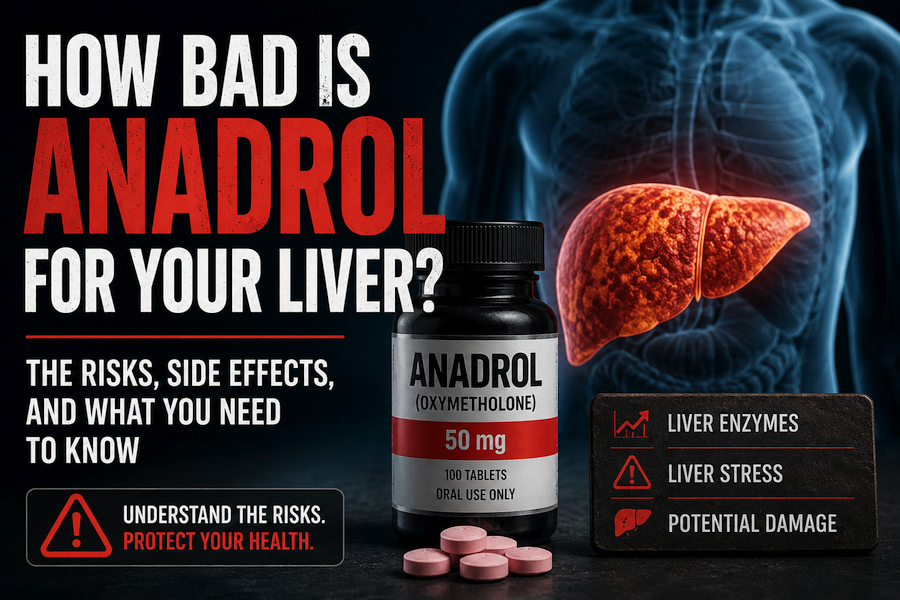
Anadrol is generally considered one of the more liver-toxic anabolic steroids, especially when used in high doses or for long periods. Because it’s an oral steroid that passes through the liver, it may increase liver enzymes, strain liver function, and in rare cases contribute to serious liver problems like jaundice or liver damage. That said, not everyone experiences severe issues, and some users tolerate short cycles better than others. Factors like dosage, alcohol use, genetics, existing health conditions, and stacking multiple compounds together all appear to matter.
If you spend enough time around bodybuilding forums, you’ll eventually notice a pattern with Anadrol. People talk about insane strength gains, rapid weight gain, and dramatic gym performance. Then, almost immediately after, the conversation turns toward side effects – especially the liver.
And honestly, that concern didn’t come out of nowhere.
Anadrol has built a reputation over the years as one of the harsher oral steroids available. Some users swear it’s “overhyped” when it comes to toxicity, while others describe it as the steroid that made them feel the sickest. The truth probably sits somewhere in the middle.
Why is Anadrol Used?
Anadrol is the brand name for oxymetholone, a powerful anabolic steroid originally developed to help treat anemia and muscle-wasting conditions. It became popular in bodybuilding because it can pack size and strength onto the body very quickly.
Compared to many other steroids, Anadrol tends to work fast. That’s part of the appeal.
A lot of users report:
- Rapid increases in body weight
- Bigger pumps in the gym
- Significant strength improvements
- Better workout intensity
- Fuller-looking muscles
Still, the downside is hard to ignore. Anadrol is also well known for side effects involving water retention, blood pressure, estrogen-like effects, and liver strain.
If you want a broader overview of the compound itself, you can also read our guide on Anadrol.

Why Anadrol Affects the Liver
The biggest reason Anadrol stresses the liver comes down to one thing: it’s an oral steroid. Unlike injectable testosterone compounds, oral anabolic steroids have to survive digestion and pass through the liver before entering circulation. To make that possible, chemists modify the steroid so it can survive being broken down too quickly.
Anadrol belongs to a class called 17-alpha-alkylated (17-aa) steroids. That modification helps the steroid remain active when taken by mouth. Unfortunately, it also makes the compound harder on the liver.
Over time, this may lead to:
- Elevated liver enzymes
- Liver inflammation
- Reduced bile flow
- Cholestatic jaundice
- Increased oxidative stress in liver tissue
Some studies and medical reports have linked oral anabolic steroids to more severe liver complications as well, although those cases tend to involve heavy abuse or long-term use (1).
Is Anadrol Worse Than Other Steroids?
In many cases, yes – especially compared to injectable steroids. Oral steroids as a group are usually considered more liver toxic than injectable forms. Anadrol, Dianabol, and Winstrol often get mentioned together because they all place notable stress on the liver.
That said, some bodybuilders argue that Anadrol’s liver toxicity is exaggerated. They point out that blood markers sometimes return to normal fairly quickly after stopping the drug.
There’s probably some truth there. Elevated liver enzymes alone do not automatically mean permanent liver damage.
Still, Anadrol does appear to have a harsher reputation than many compounds for a reason. You can also compare it with other oral steroids here:

Common Signs of Liver Stress From Anadrol
One tricky thing about liver stress is that you may not notice symptoms immediately. Some people run Anadrol and feel mostly fine until bloodwork reveals a problem. Others notice symptoms fairly quickly.
Possible warning signs include:
| Symptom | What It May Suggest |
|---|---|
| Dark urine | Reduced bile flow or liver stress |
| Yellowing of eyes or skin | Jaundice |
| Fatigue | Liver strain or systemic stress |
| Nausea | Digestive or hepatic irritation |
| Loss of appetite | Possible liver dysfunction |
| Pain under right ribs | Liver inflammation |
| Itchy skin | Cholestasis in some cases |
Now, not every headache or stomach issue means your liver is failing. People online sometimes panic over normal fluctuations. Still, if symptoms appear alongside elevated liver enzymes, it’s smart to take the situation seriously.
What Do Liver Enzymes Actually Mean?
When people talk about liver toxicity, they usually mention AST and ALT. These are enzymes measured during bloodwork. If they rise above normal ranges, it may indicate liver irritation or damage. Anadrol frequently raises these markers, particularly at higher doses.
Here’s where things get a little nuanced, though. Intense exercise itself can elevate AST and ALT. Heavy training causes muscle damage, and those enzymes don’t come exclusively from the liver. So mildly elevated values in bodybuilders are not always catastrophic.
On the other hand, extremely elevated markers (especially combined with symptoms) are more concerning. This is why bloodwork matters. Guessing rarely helps.

How Quickly Can Anadrol Harm the Liver?
That depends on several factors:
- Dose
- Cycle length
- Genetics
- Alcohol intake
- Other medications
- Whether multiple oral steroids are stacked
- Existing liver health
Some users notice elevated enzymes within only a few weeks. Longer cycles generally increase risk. R
unning Anadrol for 4-6 weeks is common in bodybuilding circles, partly because people know extended use may become progressively harsher on the liver.
Using high doses while drinking alcohol heavily is especially risky. Honestly, that combination seems surprisingly common despite the obvious problem.
Does Anadrol Cause Permanent Liver Damage?
Usually not from short-term use alone – but it absolutely can in some situations. Many users recover normal liver values after discontinuing Anadrol. The liver is surprisingly resilient and capable of healing itself.
But there are documented cases of severe complications from anabolic steroid abuse, including:
- Liver tumors
- Peliosis hepatis
- Cholestatic hepatitis
- Liver failure
These outcomes are rare, but they’re real (2).
The bigger issue is that people often underestimate cumulative stress. Someone may run multiple oral cycles over several years while also drinking alcohol, taking other medications, eating poorly, and ignoring bloodwork.
Eventually, the body starts pushing back.

Is Anadrol More Dangerous for Certain People?
Probably. Certain factors may increase risk significantly:
Existing Liver Disease
If someone already has fatty liver disease, hepatitis, or impaired liver function, Anadrol becomes far more concerning.
Heavy Alcohol Use
Alcohol alone stresses the liver. Combining it with Anadrol is a pretty rough combination.
Older Users
Age may reduce recovery capacity and increase cardiovascular risk alongside liver strain.
Polypharmacy
Some users stack Anadrol with other compounds, painkillers, stimulants, or recreational drugs. That may increase total toxicity substantially.
Can Liver Support Supplements Help?
Possibly – at least to some extent. A lot of bodybuilders use supplements like:
- TUDCA
- NAC (N-acetyl cysteine)
- Milk thistle
- Glutathione support products
There’s some evidence suggesting certain compounds may help support liver health or reduce oxidative stress (3).
Still, this is where things sometimes get misleading online. Liver support supplements don’t offer absolute protection. They may reduce strain somewhat, but they probably do not make Anadrol “safe.” That distinction matters.

Blood Pressure and Liver Health Are Connected Too
One thing people overlook is that Anadrol’s effects extend beyond just the liver. It may also negatively affect:
- Blood pressure
- Cholesterol
- Water retention
- Red blood cell thickness
When several health markers worsen simultaneously, the overall strain on the body increases. That’s one reason why some experienced users actually fear Anadrol more than certain injectable steroids. The compound can make people feel rough pretty quickly.
Are Injectable Steroids Safer for the Liver?
Generally speaking, yes. Injectable testosterone compounds usually bypass much of the liver stress associated with oral steroids.
That doesn’t mean injectable steroids are “safe,” though. They come with their own risks involving hormones, cardiovascular health, fertility, and cholesterol.
You can learn more about steroid-related hormonal effects here:
The Internet Sometimes Downplays the Risks
One thing I’ve noticed over the years is that steroid communities can swing wildly between extremes. Some people act like Anadrol is instant liver failure in tablet form. Others shrug it off entirely and say liver toxicity is “overblown.” Neither view feels completely accurate.
Short cycles with monitoring are obviously different from reckless abuse. But pretending Anadrol is harmless because someone on a forum survived multiple cycles also misses the point.
A person can smoke cigarettes for years without lung cancer. That doesn’t suddenly make smoking healthy. Risk is still risk.

So, How Bad Is Anadrol for Your Liver?
Pretty bad compared to many performance-enhancing drugs – especially when abused. Among oral steroids, Anadrol has earned its reputation for a reason. It may significantly elevate liver enzymes, impair bile flow, and contribute to serious complications in some users.
At the same time, short-term use does not automatically mean catastrophic liver damage for everyone. That nuance matters.
The severity appears to depend heavily on:
- Dose
- Duration
- Overall health
- Lifestyle habits
- Concurrent drug use
- Monitoring practices
Still, there’s no getting around the core reality: Anadrol places meaningful stress on the liver, and ignoring that fact can end badly. Anyone considering using it should at minimum understand the risks, monitor bloodwork, avoid alcohol, and stop pretending that over-the-counter liver support somehow cancels out the danger entirely.


Jim is the founder of Andro HQ and a self-taught supplement reviewer with over 12 years of personal testing experience. He has evaluated more than 150 bodybuilding products and specializes in identifying effective, science-backed alternatives to banned substances. His insights are grounded in real-world use, documented trials, and continuous experimentation in the gym. While not a licensed health professional, Jim aims to help readers navigate the often-confusing supplement market through honest, evidence-informed reviews. More about this author…