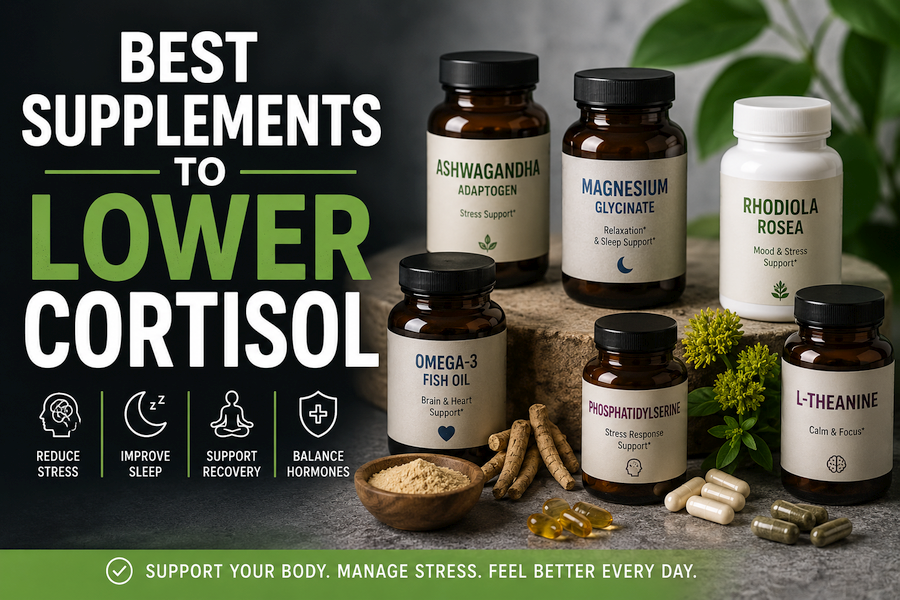
If you’re dealing with chronic stress, poor sleep, anxiety, stubborn belly fat, or burnout, high cortisol levels may be part of the problem. Some supplements appear to help lower cortisol or support a healthier stress response. The best-known options include ashwagandha, magnesium, rhodiola rosea, phosphatidylserine, omega-3 fatty acids, and L-theanine. That said, sleep, diet, caffeine intake, overtraining, and mental stress still matter a lot. In many cases, supplements seem to work best when combined with lifestyle changes rather than used alone.
Cortisol gets a bad reputation online. People often call it the “stress hormone,” and while that’s true to a point, cortisol itself is not evil.
You actually need cortisol to survive. It helps regulate blood sugar, blood pressure, inflammation, energy production, and your sleep-wake cycle. Cortisol even helps you wake up in the morning.
The problem starts when cortisol stays elevated for too long. Chronic stress, poor sleep, overtraining, illness, excessive caffeine, and emotional strain may all push cortisol higher than normal for extended periods.
When that happens, people sometimes notice symptoms like:
- Trouble sleeping
- Anxiety or irritability
- Fatigue
- Brain fog
- Increased belly fat
- Muscle loss
- Low libido
- Sugar cravings
- Poor workout recovery
- Lower testosterone levels in men (1)
I’ve personally noticed that stress can creep up slowly. Sometimes you don’t even realize your body is running “hot” until your sleep quality crashes or your energy starts feeling flat all day.
The good news is that certain supplements may help calm the stress response and support healthier cortisol levels. Some have fairly decent research behind them. Others are more mixed, but still promising.
Here are some of the best supplements worth considering.

Ashwagandha
One of the most popular cortisol-lowering supplements right now is ashwagandha. Ashwagandha is an adaptogenic herb used in traditional Ayurvedic medicine for centuries. Adaptogens are compounds that may help the body adapt to stress more effectively.
Several studies suggest ashwagandha may lower cortisol levels while improving stress, anxiety, and sleep quality (2). One study found that participants taking ashwagandha experienced significantly reduced cortisol compared to placebo groups (3). Some people also report feeling calmer and sleeping better within a couple of weeks.
What makes ashwagandha interesting is that it may also support testosterone levels in some men, especially those dealing with stress-related hormonal issues. That’s one reason it’s become popular in fitness and men’s health circles.
You can learn more in our guide on ashwagandha benefits for athletes and bodybuilders.
Potential benefits of ashwagandha
| Possible Benefit | Notes |
|---|---|
| Lower cortisol | One of the most studied effects |
| Better sleep | May improve sleep quality and relaxation |
| Reduced anxiety | Appears helpful for stress management |
| Improved recovery | Some athletes report less fatigue |
| Testosterone support | May indirectly help through stress reduction |
That said, ashwagandha is not perfect for everyone. Some people feel sleepy on it, while others experience digestive upset. There are also rare reports of thyroid-related effects.
A common dosage range is around 300–600 mg daily of a standardized extract.
Magnesium
Magnesium might be one of the most underrated supplements for stress. A surprising number of people probably do not get enough magnesium from food alone. Stress itself may also deplete magnesium levels over time, which creates a frustrating cycle.
Low magnesium levels are associated with increased stress sensitivity and poorer sleep quality (4). Supplementing with magnesium may help calm the nervous system and support relaxation. Many people notice benefits in sleep first. Better sleep alone can help lower cortisol naturally.
Different forms exist, including:
- Magnesium glycinate
- Magnesium citrate
- Magnesium malate
- Magnesium threonate
For stress and sleep, magnesium glycinate is often preferred because it tends to be gentler on the stomach. You can also read our detailed article on magnesium benefits for men.
Signs you might benefit from magnesium
- Muscle cramps
- Poor sleep
- Anxiety
- Frequent stress
- Headaches
- Twitching muscles
- Fatigue
Magnesium is not a sedative, but many people describe a subtle calming effect over time.
Rhodiola Rosea
Rhodiola rosea is another adaptogenic herb that may help the body handle physical and mental stress more efficiently. Unlike some calming supplements, rhodiola often feels more “balancing” than sedating. Some users report improved mental clarity and energy while still feeling less overwhelmed.
Research suggests rhodiola may reduce fatigue and stress-related burnout (5). This makes it particularly interesting for people who feel exhausted rather than anxious.
I’d describe rhodiola as potentially helpful for the “wired but tired” feeling many stressed people experience. You can learn more in our article about rhodiola rosea benefits.
Rhodiola may help with:
- Mental fatigue
- Burnout
- Stress resilience
- Mood support
- Exercise recovery
Still, results can vary quite a bit. Some people love rhodiola, while others barely notice it.
Phosphatidylserine
Phosphatidylserine does not get talked about as much as ashwagandha, but it has some fairly interesting research behind it. It’s a phospholipid naturally found in cell membranes, especially in the brain.
Some studies suggest phosphatidylserine supplementation may blunt excessive cortisol release after intense exercise or psychological stress (6). This makes it somewhat popular among athletes and high-performing professionals.
One interesting thing about phosphatidylserine is that it may work particularly well for exercise-induced cortisol spikes. That matters because very intense training without enough recovery can push cortisol levels higher over time.
Signs you may be overdoing training include:
- Poor recovery
- Irritability
- Trouble sleeping
- Plateaued workouts
- Lower motivation
- Increased soreness
You might also enjoy our related article on how cortisol affects muscle growth.
Typical dosage
Most studies use around 300–800 mg daily. Some people combine phosphatidylserine with magnesium or adaptogens for broader stress support.

L-Theanine
L-theanine is an amino acid naturally found in green tea. It’s known for promoting relaxation without causing heavy sedation. That’s one reason it has become popular for daytime stress support.
Some research suggests L-theanine may reduce stress responses and improve relaxation markers (7). People often describe the effect as:
- Calm focus
- Reduced mental tension
- Smoother caffeine energy
- Less anxious thinking
One interesting thing is that L-theanine is commonly paired with caffeine. The idea is that it may help reduce the jittery side effects caffeine sometimes causes.
That matters because too much caffeine may increase cortisol levels, especially in stressed individuals already running on poor sleep. If you constantly feel overstimulated from energy drinks or coffee, reducing caffeine intake may help just as much as adding supplements.
Omega-3 Fatty Acids
Omega-3 fatty acids from fish oil are usually associated with heart health, but they may also support stress management and brain function. Some evidence suggests omega-3 supplementation may help reduce stress-related inflammation and support a healthier stress response (8).
Chronic stress and elevated cortisol can increase inflammation in the body over time. That connection between stress and inflammation seems stronger than many people realize.
Omega-3s may also support:
- Brain health
- Mood
- Cardiovascular health
- Recovery
- Cognitive performance
People who rarely eat fatty fish might benefit the most.
Common omega-3 sources
| Source | Notes |
|---|---|
| Fish oil | Most common supplement form |
| Krill oil | Often more expensive |
| Salmon | Whole-food option |
| Sardines | Affordable and nutrient dense |
| Algae oil | Vegan-friendly option |

Holy Basil
Holy basil, also called tulsi, is another adaptogenic herb used traditionally for stress support. Research is still developing, but some studies suggest holy basil may help improve stress symptoms and emotional balance (9).
Many people describe holy basil as gentler than stronger adaptogens. Possible effects may include:
- Better mood
- Reduced mental fatigue
- Improved resilience to stress
- Calmer overall mood
It probably will not hit as hard as prescription anti-anxiety medications, obviously, but that’s not really the point. The goal with many adaptogens is more subtle support over time.
Vitamin C
This one surprises people. Vitamin C is not just for immune support. The adrenal glands actually contain high concentrations of vitamin C, and some research suggests it may help regulate cortisol responses during stressful situations (10).
Athletes and highly stressed individuals may burn through vitamin C more rapidly. That doesn’t mean mega-dosing vitamin C is automatically better, though. Huge doses often just lead to digestive issues.
Still, maintaining healthy vitamin C intake may support adrenal function and recovery.
Supplements Are Only Part of the Picture
This part matters. You can spend hundreds of dollars on cortisol supplements and still feel terrible if your lifestyle is wrecking your nervous system every day.
Sometimes people search for the “best cortisol supplement” while sleeping five hours per night, crushing three energy drinks daily, doomscrolling until 2 a.m., and training intensely seven days a week.
At some point, the body pushes back.
The biggest cortisol-lowering habits are usually:
- Better sleep
- Managing caffeine intake
- Regular exercise without overtraining
- Getting enough calories
- Taking rest days
- Improving relationships
- Reducing chronic stressors
- Spending time outdoors
- Meditation or breathwork
Honestly, sleep might be the biggest factor of all. You can read more in our article on how sleep quality affects testosterone and recovery.
Poor sleep and high cortisol often feed into each other. Stress hurts sleep, and bad sleep pushes cortisol higher the next day. That cycle can become brutal after a while.
Can High Cortisol Lower Testosterone?
Possibly, yes. Chronically elevated cortisol appears to compete with testosterone production in several ways (11).
High stress levels may contribute to:
- Lower libido
- Reduced muscle growth
- Fatigue
- Mood changes
- Poor recovery
This is one reason stressed men sometimes feel symptoms that overlap with low testosterone. You can also check out our article on how stress affects testosterone.
Still, it’s important not to blame every symptom on cortisol alone. Hormones are complicated, and many health conditions can mimic stress-related issues.
Are Cortisol Blockers Legit?
You’ll sometimes see supplements marketed as “cortisol blockers.” That phrase is usually exaggerated.
You do not want to completely block cortisol. Your body needs it. The goal is more about supporting balance and avoiding chronically excessive levels.
Some products use flashy marketing that makes cortisol sound like pure poison. That’s oversimplified and honestly a bit misleading.
A better approach is looking for supplements that may support:
- Stress resilience
- Recovery
- Sleep quality
- Nervous system regulation
- Adaptation to stress
That framing is usually more realistic.
When To See a Doctor
If you suspect seriously elevated cortisol, supplements alone may not be enough. You should consider medical evaluation if you experience symptoms like:
- Severe fatigue
- Rapid unexplained weight gain
- Purple stretch marks
- High blood pressure
- Persistent insomnia
- Depression
- Extreme anxiety
- Muscle weakness
Conditions like Cushing’s syndrome and adrenal disorders require proper diagnosis and treatment. Blood work or saliva testing may sometimes help clarify what’s going on.
Final Thoughts
The best supplements to lower cortisol are probably the ones that support your body’s overall stress response rather than aggressively trying to “block” cortisol itself.
For many people, ashwagandha, magnesium, rhodiola, L-theanine, and omega-3s seem to offer the most practical combination of research and real-world usefulness.
Still, supplements work best when the basics are covered first. If your sleep, diet, stress management, and recovery habits are constantly neglected, even the best supplement stack may only provide modest results.
On the other hand, when you combine smart lifestyle changes with the right supplements, the difference can feel surprisingly noticeable over time.


Jim is the founder of Andro HQ and a self-taught supplement reviewer with over 12 years of personal testing experience. He has evaluated more than 150 bodybuilding products and specializes in identifying effective, science-backed alternatives to banned substances. His insights are grounded in real-world use, documented trials, and continuous experimentation in the gym. While not a licensed health professional, Jim aims to help readers navigate the often-confusing supplement market through honest, evidence-informed reviews. More about this author…